Natural Emerald Buying Guide
Few gemstones have captured human fascination quite like the emerald. Admired for its rich green color, rarity, and timeless elegance, the emerald has been treasured by royalty, collectors, and gemstone
August 3, 2026 · 21 min read
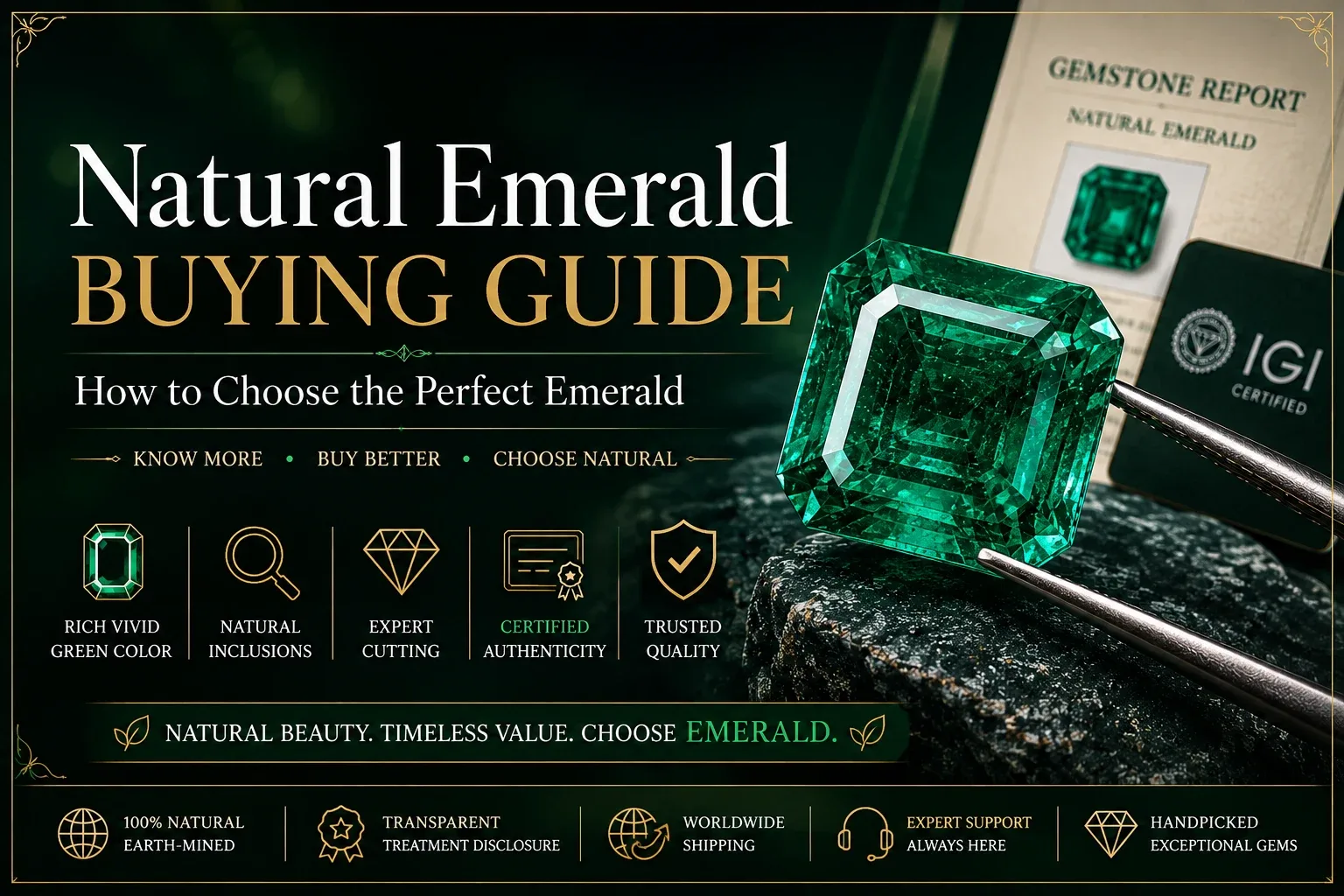
Few gemstones have captured human fascination quite like the emerald. Admired for its rich green color, rarity, and timeless elegance, the emerald has been treasured by royalty, collectors, and gemstone enthusiasts for thousands of years. From the crowns of ancient kings to modern luxury jewelry, emeralds continue to symbolize prestige, prosperity, renewal, and sophistication.
Today, buying an emerald is easier than ever thanks to online gemstone marketplaces. However, choosing the right emerald requires more than simply selecting the brightest green stone. Factors such as color, clarity, cut, origin, treatment, certification, and authenticity all influence an emerald's beauty and value.
Whether you're purchasing your first loose emerald, designing custom jewelry, or investing in a rare collector's gemstone, understanding these factors will help you make an informed decision.
This comprehensive buying guide explains everything you need to know before purchasing a natural emerald, helping you buy with confidence and avoid common mistakes.
What is an Emerald?
An emerald is the rich green variety of the mineral beryl, a gemstone family that also includes aquamarine and morganite. Its striking green color is primarily caused by trace amounts of chromium and vanadium that become part of the crystal during its formation deep within the Earth's crust.
Emeralds are formed over millions of years under extraordinary geological conditions involving intense heat, pressure, and mineral-rich fluids. Because these conditions are exceptionally rare, high-quality natural emeralds are among the most valuable colored gemstones in the world.
Emerald Facts
| Property | Details |
|---|---|
| Mineral Family | Beryl |
| Chemical Formula | Be₃Al₂Si₆O₁₈ |
| Mohs Hardness | 7.5–8 |
| Birthstone | May |
| Anniversary Stone | 20th & 35th Wedding Anniversary |
| Color | Green to Bluish Green |
| Transparency | Transparent to Translucent |
| Crystal System | Hexagonal |
Although emeralds are relatively hard, they often contain natural internal features called jardin (French for “garden”), making them more delicate than diamonds or sapphires. This natural characteristic is part of what makes every emerald unique.
Why Emeralds Are Among the World's Most Valuable Gemstones
Emeralds belong to the prestigious group of the four traditional precious gemstones:
- Diamond
- Ruby
- Sapphire
- Emerald
Several factors contribute to their exceptional value.
1. Extraordinary Rarity
Gem-quality emerald crystals are much rarer than many other gemstones. Finding an emerald with excellent color, high transparency, and minimal inclusions is uncommon, making premium-quality stones highly desirable.
2. Iconic Green Color
The vivid green hue of an emerald is unlike any other gemstone. The finest emeralds display a rich, vibrant green with balanced saturation and excellent transparency.
Color is the single most important factor influencing an emerald's value.
3. Historical Significance
Emeralds have been prized for thousands of years. Ancient civilizations, including the Egyptians, Romans, and Mughals, valued emeralds for their beauty and symbolism. They have adorned royal collections and historic treasures across cultures.
4. Enduring Popularity
From custom engagement rings to heirloom jewelry and gemstone collections, emeralds remain one of the most sought-after gemstones worldwide.
Understanding the 4Cs of Emerald Quality
Like diamonds, emeralds are evaluated using four primary quality factors:
- Color
- Clarity
- Cut
- Carat Weight
Unlike diamonds, however, color is by far the most important factor in determining an emerald's value.
A well-balanced combination of all four characteristics results in a more desirable gemstone.
Emerald Color Guide
When evaluating an emerald, experienced gemologists first look at its color. This single characteristic has the greatest influence on beauty, rarity, and market value.
The finest emeralds display:
- Rich green color
- Medium to medium-dark tone
- Strong, even saturation
- Excellent transparency
- Minimal color zoning
Emeralds that appear too light may resemble green beryl, while stones that are excessively dark can lose brilliance and appear less lively.
The Three Components of Emerald Color
Hue
Hue refers to the basic color of the gemstone.
The most desirable emeralds have a pure green hue or a slightly bluish-green appearance. A slight bluish tint is often appreciated, but strong yellowish tones may reduce value.
Tone
Tone describes how light or dark the color appears.
Medium to medium-dark tones are generally considered the most attractive because they provide a balanced combination of depth and brightness.
Saturation
Saturation measures the intensity or purity of the color.
Highly saturated emeralds exhibit a vivid, vibrant green that appears rich and lively under different lighting conditions.
Emerald Color Quality Comparison
| Quality | Characteristics |
|---|---|
| Exceptional | Rich vivid green, excellent transparency, even color |
| Fine | Strong green, slight inclusions, attractive brilliance |
| Good | Medium green, moderate saturation |
| Commercial | Pale or dark green with noticeable zoning |
Why Color Matters More Than Size
Many buyers assume a larger emerald is automatically more valuable. In reality, a smaller emerald with exceptional color can be worth significantly more than a larger stone with poor color.
For example, a vividly colored 2-carat emerald with excellent transparency may command a higher price than a 5-carat emerald with dull color and low brilliance.
This is why professional buyers prioritize color above all else when selecting an emerald.
What Makes a High-Quality Emerald?
When choosing a natural emerald, look for a gemstone that offers the best balance of:
- Rich, vivid green color
- Attractive transparency
- Natural character
- Skilled cutting
- Good proportions
- Appropriate certification
- Honest treatment disclosure
Rather than focusing on a single factor, evaluate the gemstone as a whole. An emerald with harmonious color, clarity, and cut will often appear more beautiful than a larger stone with visible flaws or poor proportions.
Emerald Clarity Explained
Unlike diamonds, where flawless clarity is highly prized, emeralds are unique because almost every natural emerald contains internal inclusions. These natural features are formed during the gemstone's growth over millions of years and are considered part of an emerald's identity rather than a flaw.
In the gemstone industry, these inclusions are commonly referred to as “Jardin,” a French word meaning “garden.” When viewed under magnification, these tiny fractures, crystals, and mineral inclusions can resemble a miniature garden or landscape.
Because inclusions are so common, finding an emerald with excellent clarity is exceptionally rare—and significantly more valuable.
What is Jardin?
Jardin refers to the natural internal characteristics found inside an emerald.
These may include:
- Tiny mineral crystals
- Fine fractures
- Liquid-filled cavities
- Growth tubes
- Feather-like inclusions
- Natural fingerprints
These inclusions are often used by gemologists to confirm that an emerald is natural rather than synthetic.
Rather than expecting a perfectly clean gemstone, buyers should look for inclusions that do not significantly reduce transparency, brilliance, or durability.
Eye-Clean vs Included Emeralds
When shopping for emeralds, you may encounter the term “Eye-Clean.”
An eye-clean emerald means:
- No obvious inclusions are visible without magnification.
- The stone appears bright and transparent when viewed normally.
- Any internal characteristics require magnification to observe.
Eye-clean natural emeralds are rare and often command premium prices.
Emerald Clarity Grades
Exceptional
- Eye-clean appearance
- Excellent transparency
- Very few visible inclusions
- Outstanding brilliance
Premium collector-grade emeralds typically fall into this category.
Very Good
- Minor inclusions
- Bright appearance
- Excellent transparency
- High jewelry quality
This represents an excellent balance between beauty and value.
Good
- Moderate inclusions
- Good transparency
- Attractive green color
- Suitable for most fine jewelry
Many high-quality commercial emeralds belong to this category.
Commercial
- Noticeable inclusions
- Lower transparency
- Visible fractures
- Reduced brilliance
These emeralds are generally more affordable but may not have the visual appeal of finer stones.
Does Higher Clarity Always Mean Better?
Not necessarily.
Unlike diamonds, color remains the most important quality factor in emeralds.
For example:
An emerald with exceptional color and moderate natural inclusions is often more valuable than a cleaner stone with weak or pale color.
Professional buyers evaluate the overall beauty of the gemstone rather than focusing on clarity alone.
Emerald Cut Guide
Cut determines how an emerald interacts with light. A well-cut emerald maximizes its beauty while minimizing stress on the stone.
Because emeralds naturally contain internal fractures, cutters prioritize preserving weight and durability while enhancing color and brilliance.
Emerald Cut
The famous Emerald Cut was developed specifically for emeralds.
Characteristics:
- Large rectangular table
- Step-cut facets
- Cropped corners
- Elegant symmetry
- Excellent color display
Benefits:
- Protects delicate corners
- Reduces pressure during setting
- Highlights rich green color
- Timeless appearance
This remains one of the most popular cuts for high-quality emeralds.
Oval Cut
Oval emeralds are increasingly popular because they:
- Appear larger than their actual carat weight
- Offer excellent brilliance
- Display color evenly
- Suit many jewelry styles
Oval cuts are an excellent choice for engagement rings and custom jewelry.
Cushion Cut
Cushion-cut emeralds feature rounded corners and larger facets.
Advantages include:
- Softer appearance
- Enhanced brilliance
- Vintage elegance
- Excellent durability
Pear Cut
Pear-shaped emeralds combine elegance with individuality.
Best suited for:
- Pendants
- Earrings
- Statement rings
Round Cut
Although less common due to crystal shape, round emeralds provide:
- Balanced brilliance
- Classic appearance
- Modern styling
Which Cut is Best?
There is no universally “best” cut.
Choose based on:
- Personal style
- Intended jewelry design
- Budget
- Color appearance
- Overall proportions
For most buyers, the Emerald Cut and Oval Cut offer the best combination of beauty and value.
Emerald Carat Weight Guide
Carat measures the weight of a gemstone, not its size.
One carat equals 0.20 grams.
As emerald size increases, high-quality stones become exponentially rarer.
0.50–1 Carat
Ideal for:
- Everyday jewelry
- Pendants
- Delicate rings
Provides an affordable entry into natural emerald ownership.
1–2 Carats
One of the most popular ranges.
Offers:
- Excellent visual impact
- Wide selection
- Strong value
Perfect for engagement rings and luxury gifts.
2–5 Carats
Premium gemstone category.
These emeralds often display:
- Rich color
- Collector appeal
- Greater rarity
Suitable for investment-quality jewelry.
5+ Carats
Large natural emeralds with exceptional color are extremely rare.
These gemstones are often purchased by:
- Serious collectors
- Investors
- Luxury jewelry manufacturers
Prices can increase dramatically due to rarity.
Why Bigger Isn't Always Better
Many first-time buyers focus only on carat weight.
However, professional gemologists know that:
A smaller emerald with exceptional color, transparency, and cutting can be considerably more valuable than a larger emerald with poor color or significant inclusions.
Always evaluate the complete gemstone rather than size alone.
Emerald Origins Around the World
The origin of an emerald does not automatically determine its quality, but certain mining regions are renowned for producing distinctive characteristics.
Colombian Emeralds
Colombia is the world's most famous emerald source.
Characteristics:
- Rich vivid green
- Slight bluish undertones
- Excellent transparency
- Highly desirable among collectors
Colombian emeralds are often considered the benchmark for premium quality.
Zambian Emeralds
Zambia has become one of the world's leading producers of fine emeralds.
Characteristics:
- Deep green
- Excellent clarity
- Slight blue-green tone
- Outstanding durability
Zambian emeralds frequently offer exceptional value.
Brazilian Emeralds
Brazil produces emeralds in a wide range of qualities.
Known for:
- Bright green color
- Larger crystal sizes
- Competitive pricing
- Excellent availability
Ethiopian Emeralds
A relatively newer source.
Characteristics:
- Bright green color
- Good transparency
- Attractive value
These emeralds continue to gain recognition in the global gemstone market.
Afghan & Pakistani Emeralds
Emeralds from Afghanistan and Pakistan are admired for:
- Rich saturation
- High transparency
- Collector interest
- Limited production
Fine examples from these regions are highly sought after.
Does Origin Matter?
Yes—but not as much as many buyers believe.
Two emeralds from different countries can vary greatly in quality.
Professional buyers evaluate:
- Color
- Clarity
- Transparency
- Cut
- Treatment
- Certification
before considering origin.
Origin should enhance a gemstone's story—not replace quality evaluation.
Natural vs Lab-Created Emeralds
One of the most important buying decisions is choosing between a natural emerald and a laboratory-grown emerald.
Natural Emeralds
Created naturally over millions of years beneath the Earth's surface.
Advantages:
- Exceptional rarity
- Unique inclusions
- Greater collector demand
- Strong investment appeal
Lab-Created Emeralds
Produced in controlled laboratory environments using advanced techniques that replicate natural formation.
Advantages:
- Lower cost
- Cleaner appearance
- Consistent color
However, laboratory-grown emeralds generally do not have the same rarity or collector value as natural gemstones.
Untreated vs Oiled Emeralds
Unlike sapphires and rubies, emeralds are commonly treated with oils to improve their appearance — see our Untreated vs Heated Gemstones guide for how heat treatment compares.
Oil treatment helps reduce the visibility of surface-reaching fractures and can enhance transparency.
This treatment is widely accepted within the gemstone industry when fully disclosed.
Untreated Emeralds
Untreated emeralds have received no clarity enhancement after mining.
Benefits include:
- Greater rarity
- Higher collector demand
- Premium value
- Strong investment appeal
Because untreated emeralds are uncommon, they often command significantly higher prices.
Oiled Emeralds
Many natural emeralds undergo minor oil treatment using colorless cedarwood oil or similar substances.
Benefits include:
- Improved transparency
- Enhanced visual appearance
- Greater affordability
- Wider availability
Minor oil treatment is generally accepted throughout the international gemstone trade.
Why Disclosure Matters
Whether an emerald is untreated or has undergone minor oil enhancement, the most important factor is transparency.
A reputable seller should always disclose any treatments and provide independent certification whenever possible. Clear disclosure helps buyers understand exactly what they are purchasing and builds long-term trust.
Emerald Treatments Explained
Natural emeralds are among the most beautiful and valuable gemstones in the world, but they are also one of the few gemstones that commonly receive clarity enhancement. Understanding these treatments is essential before making a purchase.
It's important to know that treatment does not automatically mean an emerald is fake. Many treatments are accepted within the gemstone industry when they are fully disclosed by the seller.
The key is transparency.
Why Are Emeralds Treated?
During their natural formation, emeralds often develop tiny fractures and internal cavities. These characteristics are a normal part of the gemstone and are found in the majority of natural emeralds.
To improve the gemstone's appearance, clarity, and transparency, some emeralds are treated after mining. The most common treatment is clarity enhancement using oil.
Oil Treatment
Oil treatment has been practiced for centuries and remains the most widely accepted enhancement for emeralds.
A colorless oil—traditionally cedarwood oil—is introduced into tiny surface-reaching fractures. This reduces the visibility of those fractures and improves transparency.
Oil treatment does not change the emerald's color. Instead, it helps the gemstone appear cleaner and more vibrant.
Levels of Oil Enhancement
Professional gemological laboratories generally describe oil treatment using the following levels:
No Oil (None)
- No clarity enhancement detected
- Extremely rare
- Highly desirable
- Premium collector value
Minor Oil
- Small amount of clarity enhancement
- Minimal impact on value
- Widely accepted
- Preferred by many buyers
This level is often considered the best balance between natural beauty and affordability.
Moderate Oil
- More noticeable enhancement
- Good visual improvement
- Lower price than minor oil stones
- Common in the gemstone market
Significant Oil
- Heavy clarity enhancement
- Greater visibility of treatment
- Lower market value
- Budget-friendly option
Other Emerald Treatments
While oil is the traditional enhancement, some emeralds may be treated with synthetic resins or polymers to fill fractures.
Although these treatments can improve appearance, they are generally considered less desirable than traditional oil treatment.
Always ask whether the gemstone has been treated with:
- Cedarwood Oil
- Natural Oil
- Resin
- Polymer
- Other fillers
A trustworthy seller will disclose this information.
Why Treatment Disclosure Matters
Buying an emerald should never involve guesswork.
A reputable gemstone seller should clearly state:
- Whether the emerald is natural
- Whether it has received any treatment
- The type of treatment
- The level of enhancement (if known)
- Whether the gemstone is accompanied by an independent laboratory report
Transparency helps buyers make informed decisions and compare gemstones fairly.
How Emerald Certification Protects Buyers
One of the most important steps in buying an emerald is choosing a gemstone with an independent laboratory certificate.
Certification provides confidence that the gemstone has been professionally examined and accurately described. A certificate is particularly valuable when purchasing higher-value emeralds or buying online.
What Does an Emerald Certificate Include?
A professional gemstone report may include:
- Species identification
- Gemstone variety
- Natural or laboratory-grown origin
- Carat weight
- Measurements
- Shape and cut
- Color description
- Transparency
- Treatment disclosure
- Comments from the laboratory
Some reports may also include an opinion regarding geographic origin.
Why Certification Is Important
Certification offers several benefits:
- Confirms authenticity
- Provides treatment disclosure
- Helps compare gemstones objectively
- Increases buyer confidence
- Supports resale and insurance
- Reduces the risk of purchasing misrepresented stones
For valuable emeralds, independent certification is highly recommended.
How Emerald Prices Are Determined
Emerald pricing is influenced by several factors working together rather than a single characteristic. The most important pricing factors include:
1. Color
Color has the greatest impact on value.
Emeralds with vivid, evenly distributed green color generally command higher prices than stones with pale, uneven, or overly dark tones.
2. Clarity
Although inclusions are expected, emeralds with better transparency and fewer eye-visible inclusions are usually more valuable.
3. Cut
A well-cut emerald enhances color, brilliance, and overall appearance.
Excellent proportions also improve durability and reduce the risk of damage.
4. Carat Weight
Large emeralds are much rarer than smaller ones.
As carat weight increases while maintaining excellent quality, prices often rise significantly.
5. Origin
Some origins, such as Colombia and Zambia, are highly regarded in the gemstone market.
However, origin alone should never determine value.
6. Treatment
Untreated emeralds or those with minimal oil enhancement generally command higher prices than heavily treated stones.
7. Certification
Certified emeralds often inspire greater buyer confidence because they provide independent verification of important characteristics.
Are Emeralds a Good Investment?
High-quality natural emeralds have long been appreciated by collectors for their rarity and beauty.
While gemstone prices can fluctuate based on market demand and quality, exceptional emeralds remain highly sought after.
Investment-grade emeralds typically possess:
- Natural origin
- Exceptional color
- High transparency
- Attractive clarity
- Minimal treatment
- Fine cutting
- Reliable certification
Keep in mind that gemstones should be purchased with realistic expectations. Their long-term value depends on quality, rarity, and market conditions rather than guaranteed appreciation.
Common Buying Mistakes
Many first-time buyers focus on only one characteristic. Avoid these common mistakes.
Buying Based Only on Price
A lower price may reflect lower quality, significant treatment, or a lack of certification.
Value should always be considered alongside quality.
Ignoring Treatment Disclosure
Always ask whether the emerald has received oil or other clarity enhancements.
Knowing the treatment helps you understand what you're purchasing.
Assuming Bigger Means Better
A smaller emerald with exceptional color and transparency may be more valuable than a larger stone with poor appearance.
Buying Without Certification
Independent certification adds confidence, especially for higher-value purchases.
Focusing Only on Origin
Although origin can be important, overall quality matters more.
An exceptional emerald from one region may be preferable to an average emerald from a more famous source.
How to Identify a Natural Emerald
Determining whether an emerald is natural requires expertise and specialized equipment. However, buyers can look for several indicators.
Natural emeralds often display:
- Characteristic inclusions (jardin)
- Slight color variations
- Natural growth features
- Individual personality and uniqueness
Laboratory reports remain the most reliable way to confirm authenticity and disclose treatments.
Questions to Ask Before Buying
Before purchasing an emerald, consider asking:
- Is the emerald natural?
- Has it received any treatments?
- What type of treatment was used?
- Is it accompanied by an independent laboratory certificate?
- What is the gemstone's origin (if known)?
- Can I view high-resolution photographs or videos?
- What is the return policy?
A reputable seller should answer these questions clearly and honestly.
Professional Buying Tips
Experienced gemstone buyers often prioritize:
- ✓ Color over size
- ✓ Overall beauty rather than perfection
- ✓ Transparent treatment disclosure
- ✓ Trusted certification
- ✓ Seller reputation
- ✓ High-quality photography and videos
- ✓ Detailed product information
These factors help ensure a confident purchase.
Why Trust Matters When Buying Emeralds
Buying a natural emerald is about more than choosing a beautiful gemstone. It is also about selecting a seller who values transparency, quality, and customer education.
A trustworthy seller should:
- Clearly disclose treatments
- Provide accurate gemstone descriptions
- Offer detailed images and videos
- Supply independent certification where applicable
- Be available to answer buyer questions
Building trust is just as important as selecting the gemstone itself.
How to Care for Your Emerald
Natural emeralds are treasured for their vivid green beauty, but they require thoughtful care to preserve their brilliance for generations. Although emeralds have a hardness of 7.5–8 on the Mohs scale, they often contain natural inclusions and tiny fractures, making them more delicate than gemstones like diamonds or sapphires.
With proper handling and maintenance, your emerald can remain a timeless heirloom.
Cleaning Your Emerald
Use only gentle cleaning methods.
Recommended Cleaning Method
- Fill a bowl with lukewarm water.
- Add a few drops of mild liquid soap.
- Soak the gemstone for a few minutes.
- Gently clean with a soft brush.
- Rinse with clean water.
- Dry using a lint-free microfiber cloth.
Avoid scrubbing vigorously, especially around inclusions or fractures.
Avoid Harsh Chemicals
Keep emeralds away from:
- Bleach
- Ammonia
- Household cleaners
- Strong detergents
- Perfumes
- Hair sprays
- Chlorinated water
These substances may damage clarity-enhancement materials and affect the gemstone's appearance over time.
Avoid Ultrasonic & Steam Cleaners
Unlike diamonds, emeralds should not be cleaned using:
- Ultrasonic cleaners
- Steam cleaners
These methods may stress naturally included stones or affect certain clarity enhancements.
Proper Storage
Store emeralds separately from other gemstones. A soft jewelry pouch or individual fabric-lined compartment helps prevent scratches caused by harder gemstones like diamonds or sapphires.
Regular Inspection
If your emerald is mounted in jewelry:
- Check prongs regularly.
- Have the setting inspected by a professional jeweler.
- Clean periodically.
Preventive maintenance helps protect your investment.
Why Buy Loose Emeralds?
Many experienced buyers choose loose emeralds instead of pre-set jewelry because they offer greater flexibility and transparency.
Advantages of Loose Emeralds
Better Quality Evaluation
You can examine:
- Color
- Clarity
- Transparency
- Cut
- Certification
before the gemstone is set.
Custom Jewelry Design
Loose emeralds allow you to create:
- Engagement rings
- Pendants
- Earrings
- Bracelets
- Heirloom jewelry
according to your personal style.
Greater Pricing Transparency
Buying a loose gemstone separates the value of the stone from the cost of the jewelry setting, making comparisons easier.
Long-Term Collection
Many collectors purchase loose gemstones as investment or collection pieces without immediately setting them into jewelry.
Emerald Buying Checklist
Before making your purchase, review this simple checklist.
✔ Color
Choose a rich, vivid green with even saturation.
✔ Clarity
Natural inclusions are expected, but excessive fractures or cloudiness should be avoided.
✔ Cut
Look for excellent symmetry and balanced proportions that maximize beauty.
✔ Carat Weight
Select the size that best suits your purpose and budget.
✔ Treatment Disclosure
Ask whether the emerald is:
- Untreated
- Minor Oil
- Moderate Oil
- Significant Oil
Transparency is essential.
✔ Certification
Choose gemstones accompanied by an independent laboratory certificate whenever possible.
✔ Seller Reputation
Purchase only from reputable sellers who provide:
- High-quality photographs
- Videos
- Detailed specifications
- Transparent policies
Frequently Asked Questions (FAQ)
1. What makes an emerald valuable?
The value of an emerald depends on its color, clarity, cut, carat weight, treatment, and overall quality. Rich, vivid green color is generally considered the most important factor.
2. Are natural emeralds rare?
Yes. High-quality natural emeralds are among the rarest precious gemstones in the world.
3. What is the best emerald color?
The most desirable emeralds display a rich, vivid green with strong saturation and good transparency.
4. Do all emeralds have inclusions?
Almost all natural emeralds contain inclusions, commonly known as jardin. These natural characteristics are part of the gemstone's identity.
5. Is oil treatment acceptable?
Yes. Minor oil enhancement is widely accepted within the gemstone industry when fully disclosed.
6. Are untreated emeralds more valuable?
Generally, yes. Untreated emeralds are rarer and often command higher prices than treated stones of comparable quality.
7. Which country produces the best emeralds?
Colombia is renowned for its exceptional emeralds, but outstanding stones also come from Zambia, Brazil, Ethiopia, Afghanistan, and Pakistan.
8. Can emeralds be worn every day?
Yes, but they require more care than diamonds or sapphires due to their natural inclusions.
9. What is the Mohs hardness of an emerald?
Emeralds have a hardness of 7.5–8, making them suitable for jewelry with appropriate care.
10. Should I buy a certified emerald?
Yes. Independent certification helps verify the gemstone's identity, treatment status, and other important characteristics.
11. Can emeralds increase in value?
Exceptional natural emeralds are highly sought after by collectors. Their value depends on rarity, quality, and market demand, and appreciation is not guaranteed.
12. What is the difference between natural and lab-created emeralds?
Natural emeralds are formed by geological processes over millions of years, while lab-created emeralds are grown in controlled environments. Natural stones are generally rarer and more sought after by collectors.
13. What is the best cut for an emerald?
The classic Emerald Cut is especially popular because it enhances color and helps protect the stone's corners. Oval and cushion cuts are also excellent choices.
14. Are darker emeralds always better?
Not necessarily. The ideal emerald has a rich green color with balanced tone and strong saturation. Extremely dark stones may lose brilliance.
15. Is certification enough to guarantee quality?
Certification verifies important gemological characteristics, but buyers should also evaluate color, clarity, cut, and overall appearance.
Final Thoughts
A natural emerald is more than a beautiful gemstone—it is a symbol of nature, rarity, elegance, and enduring value. Understanding how color, clarity, cut, carat weight, origin, treatments, and certification influence quality allows you to make informed purchasing decisions.
Whether you are searching for an emerald for a custom engagement ring, a meaningful gift, a collector's piece, or a long-term investment, selecting a gemstone from a trusted source is essential.
Rather than focusing on a single characteristic such as size or origin, evaluate the emerald as a whole. A balanced combination of exceptional color, attractive clarity, expert cutting, transparent treatment disclosure, and reliable certification will provide lasting satisfaction.
Why Choose JAMSORA?
At JAMSORA, we believe every gemstone tells a story shaped by nature over millions of years. Our collection of natural loose emeralds is carefully selected for quality, authenticity, and craftsmanship.
When you choose JAMSORA, you benefit from:
- Carefully curated natural loose emeralds
- Transparent treatment disclosure
- Independent certification options
- High-quality images and videos
- Worldwide shipping
- Dedicated customer support
- A commitment to trust, authenticity, and education
Whether you're beginning your gemstone journey or expanding a treasured collection, we're here to help you choose with confidence. Browse our certified Emerald collection to find your next stone.
Related Topics
Ready to find your own gemstone?
Shop Certified Gemstones