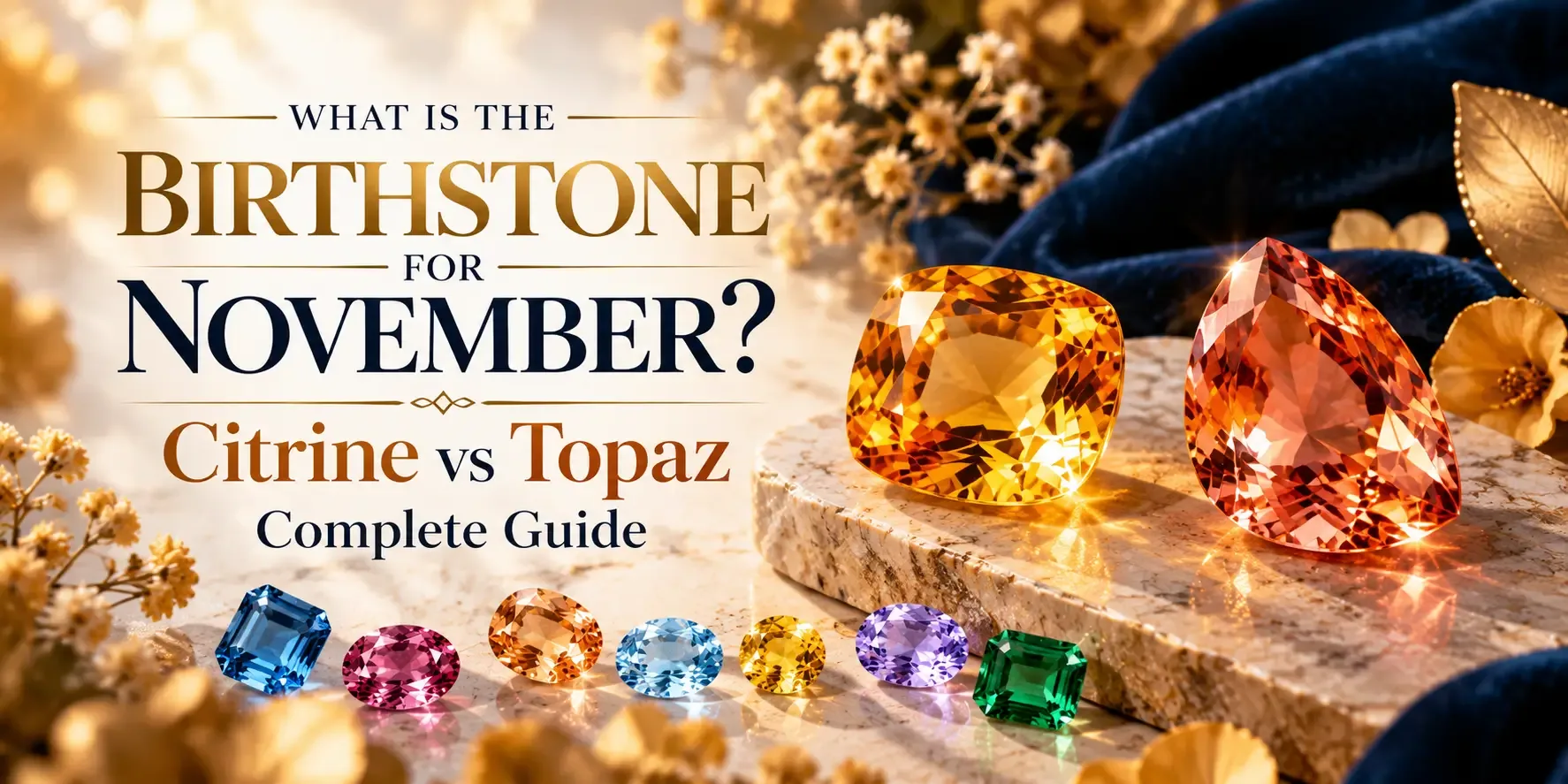
What Is the Birthstone for November? Citrine vs Topaz – A Complete Guide
Discover the colors, meanings, differences, prices, and jewelry possibilities of November's two beautiful birthstones.
October 28, 2026 · 14 min read
Every birth month has a gemstone associated with it, but November is especially interesting because it has not one, but two beautiful birthstones: citrine and topaz.
Both gemstones are admired for their warm colors, attractive appearance, and long history in jewelry. Citrine is known for its sunny yellow and golden-orange shades, while topaz offers a much wider range of colors, including yellow, blue, pink, orange, and rare reddish tones.
If you're looking for a November birthday gift, choosing a gemstone for a custom ring, or simply exploring natural gemstones, understanding the differences between citrine and topaz can help you make the right decision.
In this complete guide, we'll explore the meaning, history, colors, durability, pricing, and jewelry uses of both November birthstones.
What Is the Birthstone for November?
November has two officially recognized modern birthstones: topaz and citrine.
Traditionally, topaz has been associated with November, particularly in its golden-yellow and orange varieties. Citrine later became a widely recognized alternative, offering a similar warm appearance at generally more affordable prices.
Both gemstones are beautiful, but they are not the same mineral. Topaz belongs to its own mineral species, while citrine is a yellow-to-orange variety of quartz. This difference affects their physical properties, available colors, rarity, and market prices.
| Feature | Citrine | Topaz |
|---|---|---|
| Mineral | Quartz | Topaz |
| Common colors | Yellow, golden, orange, brownish orange | Yellow, blue, pink, orange, colorless, and others |
| Mohs hardness | 7 | 8 |
| Durability | Generally good toughness | Harder, but vulnerable to cleavage-related breakage |
| Typical pricing | Generally affordable | Varies from affordable to very expensive |
| Popular jewelry | Rings, pendants, earrings | Rings, pendants, earrings |
| November birthstone | Yes | Yes |
Citrine: The Golden Birthstone of November
What Is Citrine?
Citrine is a transparent yellow-to-orange variety of the mineral quartz. Its color ranges from pale lemon yellow to warm honey, golden orange, and deeper reddish-brown shades.
The name citrine is associated with the French word citron, meaning lemon, a reference to its characteristic yellow color.
Citrine has been used in jewelry and decorative objects for centuries. Today, it remains popular because it combines attractive color, versatility, and relatively accessible pricing.
Looking for one? Citrine isn't listed in our online shop yet, but our team can source it for you: enquire about citrine.
What Does Citrine Symbolize?
Citrine has traditionally been associated with:
- Happiness and optimism
- Prosperity and abundance
- Confidence and creativity
- Warmth and positive energy
- Friendship and generosity
These associations come from gemstone folklore and cultural traditions. They should be understood as symbolic meanings rather than scientifically established effects.
For many people, citrine's cheerful golden color is reason enough to choose it as a birthday gift.
What Colors Does Citrine Come In?
Citrine is available in several attractive shades.
- Pale yellow citrine: a light, delicate shade suitable for understated jewelry.
- Golden yellow citrine: a warm, sunny color that works beautifully with yellow or rose gold.
- Orange citrine: a richer color that creates a striking appearance in statement jewelry.
- Madeira-color citrine: a trade description often used for deep orange to reddish-orange or brownish-orange citrine.
Color preference is personal. Some buyers love bright golden-yellow stones, while others prefer deeper orange shades.
Is Citrine Natural or Heat-Treated?
This is an important question when purchasing citrine.
Naturally occurring yellow citrine exists, but much of the citrine sold in the gemstone market is produced by heating amethyst or other suitable quartz material.
Heat-treated citrine is still quartz of natural mineral origin when the starting material was naturally formed. However, its color has been altered through treatment, and natural-color citrine and heat-treated citrine should not be represented as identical in treatment status.
If you're specifically looking for untreated citrine, ask for clear treatment disclosure and appropriate laboratory documentation. Our guide to untreated vs heated gemstones explains what to ask.
Where Is Citrine Found?
Citrine and the quartz materials used to produce commercial citrine come from several countries. Important sources include Brazil, Bolivia, Madagascar, Uruguay, and other gemstone-producing regions.
Brazil is particularly significant in the commercial citrine market because of its abundant quartz deposits.
How Durable Is Citrine?
Citrine has a hardness of 7 on the Mohs scale. This makes it suitable for many types of jewelry, including earrings, pendants, and rings.
However, it can still be scratched or damaged by harder materials and strong impacts. For a ring intended for frequent wear, a protective setting and reasonable care are recommended.
Topaz: The Traditional November Birthstone
What Is Topaz?
Topaz is a naturally occurring silicate mineral admired for its clarity, brilliance, and wide range of colors.
Although many people associate November topaz with yellow or golden-orange shades, topaz can also occur in blue, pink, red, violet, brown, and colorless varieties. Some of the most desirable natural topaz gemstones display beautiful pinkish-orange to reddish-orange colors.
Topaz has a long history in gemstone jewelry and remains an attractive choice for both classic and contemporary designs.
Topaz isn't listed in our online shop yet either, but we can source it on request: enquire about topaz.
What Does Topaz Symbolize?
Throughout history, topaz has been associated with:
- Friendship and affection
- Strength and courage
- Loyalty and sincerity
- Wisdom and confidence
- Good fortune
Ancient cultures attributed various protective and symbolic qualities to topaz. Today, these traditional associations make it a meaningful choice for birthdays, anniversaries, and personal gifts.
As with citrine, these meanings belong to gemstone traditions rather than proven medical or therapeutic effects.
What Colors Does Topaz Come In?
One of the most interesting qualities of topaz is its variety of colors.
- Yellow topaz: a classic November birthstone color, ranging from pale yellow to deeper golden tones.
- Blue topaz: popular in light sky blue, Swiss blue, and London blue shades. Most blue topaz on the market has undergone color treatment.
- Pink topaz: a beautiful choice for delicate and romantic jewelry.
- Orange topaz: warm orange and reddish-orange colors can be particularly attractive.
- Imperial topaz: a valuable trade category generally associated with desirable pinkish-orange, reddish-orange, and related warm hues. The term is used differently in the market, so buyers should assess the actual stone rather than relying only on the name.
- Colorless topaz: a transparent variety that can be cut into brilliant gemstones.
Is Blue Topaz Natural?
Topaz is a natural mineral, but the strong blue colors commonly seen in commercial jewelry are usually produced through irradiation and heat treatment.
Naturally blue topaz exists, but it is generally much paler and less common than treated commercial blue topaz. When purchasing blue topaz, treatment disclosure is important.
Where Is Topaz Found?
Topaz occurs in several gemstone-producing countries. Brazil is an especially important source, particularly for fine colored topaz. Other sources include Pakistan, Sri Lanka, Nigeria, Madagascar, Namibia, and additional regions.
The geographic origin of a gemstone should not be assumed simply from its color.
How Durable Is Topaz?
Topaz has a Mohs hardness of 8, making it more resistant to scratching than citrine.
However, topaz has perfect cleavage in one direction. This means a strong impact in an unfavorable direction can cause the stone to split or chip. For this reason, topaz should be handled carefully even though it is relatively hard.
A secure, protective jewelry setting is particularly important for rings.
Citrine vs Topaz: What Is the Main Difference?
Citrine and yellow topaz can look similar at first glance. Both may display attractive golden or yellow colors, and both are recognized as November birthstones. However, they differ in several important ways.
1. Mineral Composition
Citrine is a variety of quartz, while topaz is a separate mineral species. They have different chemical compositions and crystal structures, so citrine and topaz are not interchangeable gemstone names.
2. Color Variety
Citrine is primarily associated with yellow and orange colors. Topaz offers a much wider color range, making it suitable for buyers who prefer blue, pink, orange, or other shades.
3. Hardness and Toughness
Topaz is harder than citrine, but hardness alone doesn't determine overall durability. Citrine has good toughness for ordinary jewelry use, while topaz requires additional care because of its cleavage.
4. Rarity
Commercial citrine is generally readily available, especially in heat-treated material. Common varieties of topaz can also be affordable, but fine natural pink, red, and certain imperial topaz colors may be significantly rarer.
5. Price
Citrine is usually one of the more accessible yellow-to-orange gemstones. Topaz prices vary considerably depending on color, rarity, treatment, cut, size, and quality. Common treated blue topaz may be affordable, while exceptional natural-colored topaz can command much higher prices.
Looking for a citrine or topaz?
We don't list citrine or topaz in our online shop yet, but our gemstone specialists can source a natural stone to your color, shape, size and budget. Send us a quick enquiry and we'll reply within 24 hours.
Citrine vs Topaz: Which Birthstone Is More Expensive?
There is no single price that applies to every citrine or topaz gemstone. Gemstone prices depend on the individual stone.
For citrine, important factors include color, transparency, cut quality, size, and treatment status. For topaz, color rarity can make an especially large difference.
A commercial blue topaz may cost less than a fine citrine of similar size, while a rare natural pinkish-orange topaz may cost substantially more. This is why comparing gemstones by carat weight alone can be misleading.
The best approach is to compare the actual gemstone's characteristics, documentation, and final selling price.
Which November Birthstone Is Better for Jewelry?
Both citrine and topaz can look beautiful in jewelry, but the best choice depends on how the piece will be worn.
Citrine Rings
Citrine works well in cocktail rings, birthday rings, and statement designs. Its warm golden shades complement yellow gold, rose gold, and silver.
For everyday use, consider a setting that protects the stone from accidental impacts.
Topaz Rings
Topaz offers more color choices, making it suitable for different styles. Blue topaz looks elegant in white gold or silver, while orange and pink topaz can be particularly attractive in yellow or rose gold.
Because topaz can split along its cleavage plane, ring settings should be designed with protection in mind.
Citrine and Topaz Pendants
Pendants are an excellent option for both gemstones because they are generally exposed to fewer knocks than rings.
An oval citrine pendant creates a warm, classic appearance, while a pear-shaped blue topaz pendant offers a cooler, contemporary look.
November Birthstone Earrings
Citrine and topaz earrings are beautiful choices for birthday gifts. Round, oval, cushion, and pear shapes can work especially well.
Because earrings typically experience less direct impact than rings, they are a practical option for both gemstones.
Best Gemstone Shapes for Citrine and Topaz
Gemstone shape has a strong influence on the final appearance of jewelry. Our gemstone shape guide covers each cut in more detail.
| Shape | Citrine | Topaz |
|---|---|---|
| Oval | Elegant, warm appearance | Classic and versatile |
| Round | Bright, balanced look | Brilliant and timeless |
| Cushion | Soft, vintage-inspired | Rich and sophisticated |
| Pear | Graceful for pendants | Attractive for earrings and pendants |
| Emerald cut | Clean, structured appearance | Highlights transparency and color |
| Marquise | Elongated, distinctive style | Elegant statement designs |
The best shape depends on the stone's individual cutting quality, color, and intended jewelry design. If you're torn between the three most popular outlines, see oval vs cushion vs emerald cut.
How to Choose a Natural November Birthstone
Before purchasing citrine or topaz, consider a few practical factors.
Choose Your Preferred Color
Do you prefer the golden warmth of citrine or the wider color selection of topaz? Start with the color you genuinely enjoy.
Check the Gemstone's Treatment
Some citrine is produced by heating natural quartz, while many commercial blue topaz gemstones undergo irradiation and heating. Ask the seller for clear treatment information.
Review the Cut and Transparency
Look for a gemstone with attractive proportions and an appealing appearance. Examine photographs or videos of the actual stone when possible.
Consider the Jewelry Design
A gemstone intended for a pendant may have different practical requirements from one intended for a frequently worn ring.
Check the Documentation
For valuable or unusually represented gemstones, an independent gemological report can provide useful information about identity and detectable treatments. Here's why an IGI certificate matters.
Compare Prices Carefully
Compare gemstones with similar characteristics rather than assuming that a larger stone is always a better purchase.
How to Clean and Care for Citrine and Topaz
Both November birthstones benefit from careful handling.
For citrine: use warm water, mild soap, and a soft brush. Avoid strong impacts, harsh chemicals, and sudden temperature changes.
For topaz: use warm, soapy water and a soft cloth or brush. Avoid steam and ultrasonic cleaning, as well as high heat and sudden temperature changes.
Store each gemstone separately from harder jewelry pieces to reduce the risk of scratches. If the gemstone has special treatments or coatings, follow care instructions appropriate to those treatments.
Are Citrine and Topaz Good Birthday Gifts?
Yes. Both gemstones offer attractive choices for November birthdays.
Citrine is ideal for someone who enjoys warm golden colors and cheerful, understated elegance. Topaz is suitable for someone who prefers a wider selection of colors or wants a more distinctive gemstone.
A loose gemstone can also be a thoughtful gift for someone planning custom jewelry. Rather than choosing a finished design, the recipient can work with a jeweler to create a ring, pendant, or pair of earrings that reflects their personal style.
Citrine vs Topaz: Which Should You Choose?
Choose citrine if you prefer golden-yellow and orange gemstones, enjoy warm colors, and want a beautiful birthstone that is generally accessible in a range of sizes.
Choose topaz if you prefer more color options, are interested in blue or pink gemstones, or want to explore rarer natural-colored varieties.
Neither gemstone is automatically better than the other. The right November birthstone is the one that suits your taste, budget, and intended jewelry design. When you know what you want, ask us about citrine or ask us about topaz.
Explore Natural Gemstones at JAMSORA
At JAMSORA, we believe every natural gemstone has its own character. Understanding gemstone varieties, colors, treatments, and quality can help buyers make more confident decisions.
If you love the golden color of a November birthstone, a natural yellow sapphire gives a similar warm look with a Mohs hardness of 9, which makes it a durable choice for an everyday ring. For deeper honey and orange tones, take a look at hessonite garnet.
Our collection also includes sapphire, ruby, emerald, alexandrite, aquamarine, peridot, amethyst and cat's eye, each listed with its own photos, measurements and details.
Browse all natural gemstones at JAMSORA, or read our August birthstone guide to peridot.
Frequently Asked Questions About November Birthstones
What are the two birthstones for November?
November has two modern birthstones: citrine and topaz.
What is the traditional November birthstone?
Topaz is the traditional November birthstone, particularly in yellow and orange colors. Citrine is a widely recognized modern alternative.
What color is the November birthstone?
November is commonly associated with yellow, golden, and orange gemstones. However, topaz also comes in blue, pink, colorless, and other colors.
Is citrine the same as yellow topaz?
No. Citrine is quartz, while topaz is a separate mineral. They can look similar but have different physical and chemical properties.
Which is more expensive, citrine or topaz?
Citrine is generally affordable. Topaz prices vary widely, from inexpensive commercial material to rare and valuable natural-colored stones.
Is citrine a natural gemstone?
Citrine is a quartz gemstone. Naturally occurring citrine exists, but much commercial citrine is made by heating naturally formed amethyst or other quartz.
Is blue topaz a November birthstone?
Yes. Topaz is a November birthstone, and blue topaz is one of its popular color varieties. Most commercial blue topaz has been treated to produce its color.
Which is harder, citrine or topaz?
Topaz has a Mohs hardness of 8, while citrine has a hardness of 7. However, topaz is vulnerable to cleavage-related breakage, so hardness alone does not determine durability.
Can I wear citrine or topaz every day?
Both can be worn in jewelry, but care is important. Protective settings and avoiding impacts are especially advisable for rings.
What does the November birthstone symbolize?
Traditionally, citrine is associated with happiness, prosperity, and optimism, while topaz is associated with friendship, strength, and affection. These are cultural and symbolic beliefs.
Final Thoughts: Two Beautiful Birthstones, One Special Month
November is fortunate to have two distinctive birthstones.
Citrine offers warm golden beauty, cheerful color, and accessible choices for a variety of jewelry designs. Topaz brings an impressive range of colors, from classic yellow and orange to beautiful blue and rare pinkish-red shades.
Both gemstones have fascinating histories and individual characteristics worth understanding. Whether you're celebrating a November birthday, selecting a meaningful gift, or choosing a gemstone for custom jewelry, the most important consideration is finding a stone you truly love.
Citrine or topaz: your perfect November birthstone is the one that reflects your personal style.
Related Topics
- November Birthstone
- Citrine vs Topaz
- Citrine Birthstone
- Topaz Birthstone
- November Birthday Gemstone
- Natural Gemstones
- Birthstone Guide
- November Birthstone Meaning
- November Birthstone Color
- Yellow Topaz
- Blue Topaz
- Citrine Gemstone
- Precious Gemstones
- Loose Gemstones
- Gemstone Buying Guide
- Gemstone Jewelry
- Gemstone Education
- JAMSORA
Ready to find your own gemstone?
Shop Certified Gemstones