Oval vs Cushion vs Emerald Cut: Which Gemstone Cut Is Best for You?
When buying a natural loose gemstone, one of the first decisions you'll encounter is the cut.
August 23, 2026 · 16 min read
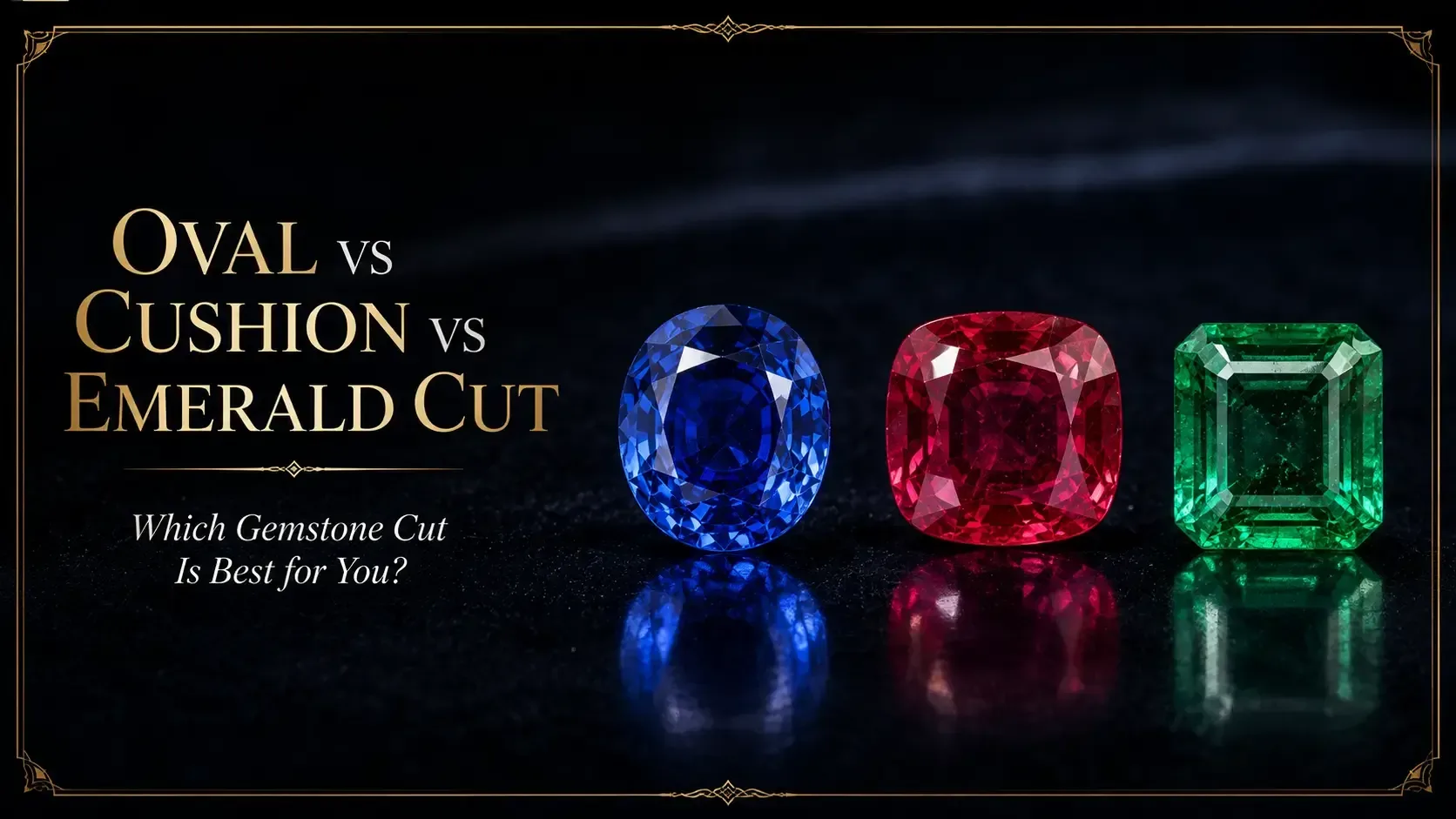
A Complete Guide to Choosing the Right Cut for Natural Loose Gemstones
When buying a natural loose gemstone, one of the first decisions you'll encounter is the cut.
Should you choose an elegant Oval?
A romantic Cushion?
Or the sophisticated Emerald Cut?
The answer isn't simply about which shape looks the most beautiful.
The right cut can influence how a gemstone displays its color, brilliance, transparency, apparent size, and overall personality. For colored gemstones, cutting is especially important because the cutter must balance beauty with the characteristics of the rough material.
This is why two gemstones of the same species, color, and carat weight can look dramatically different when cut in different styles.
In this guide, we'll compare Oval, Cushion, and Emerald Cut gemstones and explain their characteristics, advantages, limitations, ideal uses, and what to look for when buying a natural loose gemstone.
Whether you're choosing a blue sapphire, ruby, emerald, spinel, aquamarine, or another colored gemstone, this guide will help you make a more informed decision.
Oval vs Cushion vs Emerald Cut at a Glance
Before going into the details, here's a quick comparison:
| Feature | Oval | Cushion | Emerald Cut |
|---|---|---|---|
| Overall Style | Elegant & versatile | Romantic & luxurious | Sophisticated & architectural |
| Typical Appearance | Elongated | Rounded square/rectangle | Rectangular with cropped corners |
| Faceting | Often brilliant or mixed | Often brilliant or mixed | Usually step cut |
| Light Performance | High brilliance | Strong brilliance with broader flashes | Refined flashes rather than intense sparkle |
| Color Display | Excellent | Excellent | Excellent, especially for rich colors |
| Inclusions Visibility | Moderate | Moderate | More visible |
| Best For | Versatile jewelry | Statement & vintage-inspired designs | Sophisticated luxury |
| Face-Up Size | Often appears elongated and substantial | Can appear broad and substantial | Can look large due to broad table |
| Personality | Classic | Romantic | Elegant & understated |
One important point: shape and cut style are not always interchangeable terms. GIA notes that a gemstone's shape describes its outline, while cut style describes how its facets are arranged. Oval and cushion gemstones can be fashioned using different facet patterns, while the term Emerald Cut commonly refers to a step-cut arrangement.
What Is the Difference Between Shape and Cut?
This distinction is particularly important when shopping for colored gemstones.
Shape
Shape describes the gemstone's outline when viewed from above.
Examples include:
- Oval
- Cushion
- Round
- Pear
- Heart
- Marquise
- Emerald-shaped rectangle
Cut Style
Cut style describes how the facets are arranged and how the gemstone interacts with light.
Common styles include:
- Brilliant cut
- Step cut
- Mixed cut
- Cabochon
For example, an oval gemstone can have a brilliant-style, step-style, or mixed-cut facet arrangement.
Similarly, cushion-shaped gemstones can be cut in different facet styles.
GIA specifically notes that ovals and cushions are often fashioned as mixed cuts, combining brilliant-style crowns with step-cut pavilions.
This distinction matters because the outline alone doesn't tell you exactly how the gemstone will look when it interacts with light.
1. Oval Cut Gemstones
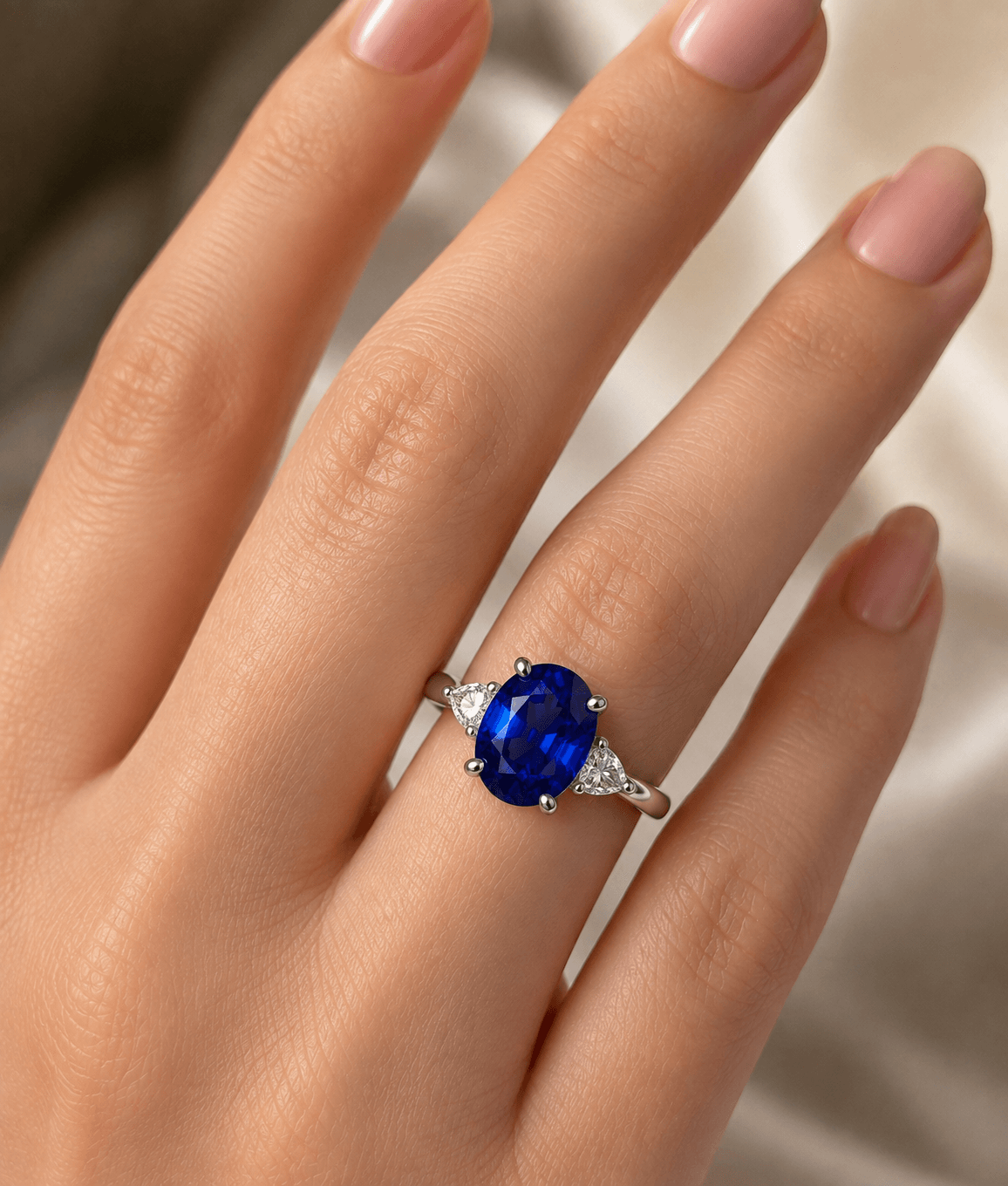
The Oval is one of the most versatile gemstone shapes available.
Its elongated outline combines the classic appeal of a round gemstone with a longer silhouette.
Oval gemstones can work beautifully across many types of natural colored stones, including:
- Blue Sapphire
- Ruby
- Emerald
- Spinel
- Aquamarine
- Tanzanite
- Yellow Sapphire
Because the oval outline can be fashioned with different facet arrangements, two oval gemstones can have noticeably different appearances.
What Makes an Oval Gemstone Attractive?
A well-cut oval can provide:
- Excellent brilliance
- Attractive color distribution
- Elegant proportions
- An elongated appearance
- Strong visual presence
For colored gemstones, the cutter also needs to consider how the proportions affect the gemstone's face-up color and transparency.
GIA notes that cut quality involves much more than shape—it includes proportions, symmetry, polish, and facet placement, all of which influence how a gemstone interacts with light.
Advantages of Oval Cut
1. Versatile Design
Oval gemstones work with both classic and contemporary jewelry designs.
2. Elegant Appearance
The elongated silhouette gives the gemstone a graceful appearance.
3. Excellent for Rings
Oval gemstones are especially popular as center stones.
4. Strong Color Display
A properly cut oval can display rich and attractive color across its face.
5. Multiple Cutting Possibilities
Because oval is primarily a shape rather than a single fixed facet pattern, cutters have considerable flexibility.
Potential Limitations of Oval Cuts
Not every oval is automatically well cut.
When evaluating an oval gemstone, watch for:
- Uneven symmetry
- Excessively narrow shoulders
- Uneven outline
- Visible windowing
- Poorly centered culet or keel
- Uneven color distribution
GIA notes that symmetry and proper proportions are important to a gemstone's visual appeal, and issues such as pinched shoulders or an off-center culet can negatively affect the appearance of an oval.
Who Should Choose an Oval Gemstone?
Oval is an excellent choice if you want:
- A timeless shape
- A versatile gemstone
- An elegant center stone
- Strong visual presence
- A balance between classic and modern styling
Best personality match: Classic, sophisticated, versatile.
2. Cushion Cut Gemstones
Cushion-shaped gemstones have a distinctive combination of soft rounded corners and a square or rectangular outline.
The result is a shape that feels both classic and contemporary.
Cushion gemstones can be especially attractive when used with rich-colored stones because their broad outline provides substantial visual presence.
Why Is the Cushion Cut Popular?
Cushion-shaped gemstones have a long history in gem cutting and jewelry design.
Modern cushions can vary considerably in:
- Length-to-width ratio
- Corner shape
- Facet arrangement
- Facet size
- Overall proportions
This means that one cushion gemstone can look completely different from another.
Cushion Brilliant vs Cushion Mixed Cuts
Not every cushion gemstone has the same facet arrangement.
Some cushions use brilliant-style faceting, while others may incorporate step-cut elements.
GIA notes that cushions and ovals are frequently cut using mixed-cut arrangements, combining brilliant and step-cut styles.
This creates a balance between:
- Brilliance
- Broad flashes
- Color display
- Visual depth
Advantages of Cushion Cut
1. Romantic Appearance
Rounded corners create a softer look than a sharp rectangular outline.
2. Excellent Color Presence
Cushion shapes can provide a broad face-up area for displaying a gemstone's color.
3. Vintage Appeal
The shape works beautifully with vintage-inspired jewelry.
4. Strong Statement Look
A cushion can appear substantial without requiring an extremely large carat weight.
5. Flexible Proportions
Cushions can be:
- Square
- Slightly rectangular
- Elongated rectangular
This provides considerable design flexibility.
Potential Limitations of Cushion Cut
Because cushion gemstones can vary significantly in facet arrangement and proportions, buyers should not judge them only by the word "cushion."
Look closely at:
- Symmetry
- Facet pattern
- Color distribution
- Windowing
- Proportions
- Polish
Two cushion gemstones of identical carat weight can have very different face-up appearances.
Who Should Choose a Cushion?
Cushion is an excellent choice for someone who wants:
- A romantic appearance
- Vintage-inspired luxury
- Broad color presence
- Soft corners
- A distinctive center stone
Best personality match: Romantic, artistic, traditional with a modern touch.
3. Emerald Cut Gemstones
The Emerald Cut is perhaps the most recognizable of the three.
Unlike Oval and Cushion, Emerald Cut commonly refers not only to an outline but also to a specific step-cut facet arrangement.
Step cuts use long, generally parallel facets that create broad reflections and a sophisticated "hall of mirrors" effect.
GIA identifies the emerald cut as the classic example of a step-cut style.
Why Was the Emerald Cut Developed?
The cutting style was historically associated with emeralds because emerald rough commonly contains inclusions and fractures.
The step-cut arrangement helps create an elegant appearance while allowing cutters to work carefully with the material.
GIA explains that emerald cutting can help protect vulnerable corners and that cutting must also be planned to maximize the gemstone's color while minimizing the impact of fractures.
Today, the style is used far beyond emeralds.
You can find step-cut gemstones such as:
- Blue Sapphire
- Emerald
- Ruby
- Aquamarine
- Tourmaline
- Spinel
What Does an Emerald Cut Look Like?
A traditional Emerald Cut typically features:
- Rectangular outline
- Cropped corners
- Large table
- Long step facets
- Strong symmetry
- Broad flashes of reflected light
Instead of the intense sparkle associated with many brilliant cuts, Emerald Cut gemstones tend to create a more refined, mirror-like visual effect.
Advantages of Emerald Cut
1. Sophisticated Appearance
The clean lines create an elegant and architectural aesthetic.
2. Excellent Color Display
The broad facets can make color appear concentrated and visually prominent.
3. Strong Symmetry
A well-executed step cut has a particularly structured appearance.
4. Luxury Appeal
The style works exceptionally well with minimalist and high-end jewelry designs.
5. Beautiful for Richly Colored Stones
Deep blue sapphires, vivid emeralds, and richly colored rubies can look particularly striking in step cuts.
Potential Limitations of Emerald Cut
The large, open facets can make imperfections easier to see.
This means you should pay close attention to:
- Transparency
- Clarity
- Windowing
- Symmetry
- Color zoning
- Facet alignment
GIA explains that step cuts can reveal clarity characteristics more readily because their larger facets provide fewer areas where inclusions can be visually disguised.
For colored gemstones, however, the goal isn't necessarily to find a flawless stone.
Instead, look for the best balance between:
Color + Transparency + Clarity + Cut Quality.
Oval vs Cushion vs Emerald Cut: Light Performance
One of the biggest differences between these cuts is how they interact with light.
Oval
Often provides strong brilliance and lively reflections, especially when fashioned with brilliant or mixed faceting.
Cushion
Can produce broad, attractive flashes combined with strong brilliance depending on its facet arrangement.
Emerald Cut
Produces larger, more organized reflections rather than rapid scintillation.
GIA distinguishes brilliant and step-cut styles in terms of facet arrangement and their different visual effects.
Which Cut Shows the Most Sparkle?
If your priority is lively brilliance and frequent flashes, an Oval or a brilliant-style Cushion may be the better choice.
If your priority is broad reflections and elegant flashes, Emerald Cut may be preferable.
However, there is no universal ranking.
The quality of the individual gemstone's cutting matters enormously.
A poorly cut Oval may look dull, while an expertly cut Emerald Cut can appear remarkably bright.
Which Cut Shows Color Best?
For colored gemstones, color is often more important than sparkle.
The right cut can help maintain the desired balance between:
- Hue
- Tone
- Saturation
- Transparency
GIA emphasizes that color is a major value factor in colored gemstones and that cutters must manage light carefully to preserve or enhance the desired face-up color.
Oval
Excellent for displaying strong overall color.
Cushion
Can provide a broad area of saturated color.
Emerald Cut
Can create a deep, concentrated color impression through its large step facets.
Which Cut Is Best for Blue Sapphire?
All three can work beautifully with blue sapphire.
Choose Oval Sapphire if:
You want:
- Classic elegance
- Strong brilliance
- Versatility
Choose Cushion Sapphire if:
You want:
- Rich color
- A broader appearance
- Vintage-inspired luxury
Choose Emerald Cut Sapphire if:
You want:
- Sophisticated elegance
- Broad flashes
- A structured appearance
For a deeply saturated sapphire, Emerald Cut can create a dramatic look. For a lively and brilliant sapphire, Oval can be particularly attractive.
Choosing the stone itself first? See our Blue Sapphire Buying Guide.
Which Cut Is Best for Ruby?
Ruby is primarily valued for its color, so the cutting style should support the gemstone's red appearance.
Oval Ruby
Excellent for classic jewelry.
Cushion Ruby
Especially attractive for rich, vivid red stones and vintage-inspired designs.
Emerald Cut Ruby
Best suited to rubies with good transparency and attractive clarity because the large step facets can make inclusions more apparent.
For more on evaluating the stone itself, see our Natural Ruby Buying Guide.
Which Cut Is Best for Emerald?
Emerald Cut is the traditional choice for emeralds, but it isn't the only option.
The classic step-cut style can beautifully display emerald's green color and provide an elegant appearance.
However, Oval and Cushion emeralds can also be excellent choices when the rough material and cutting quality support them.
GIA notes that the emerald shape is the most popular cut for emeralds and that good cutting should maximize color while minimizing the visual impact of fractures.
For more on evaluating the stone itself, see our Natural Emerald Buying Guide.
Which Cut Is Best for Tanzanite?
Tanzanite can work particularly well in:
- Oval
- Cushion
- Emerald Cut
Because tanzanite can display different colors depending on viewing direction, cutting orientation can influence its appearance.
For someone who wants lively brilliance, consider an Oval.
For a sophisticated luxury appearance, consider Emerald Cut.
For a softer, romantic appearance, Cushion can be an excellent choice.
Which Cut Looks Biggest?
There is no simple rule that one cut always looks larger.
Apparent size depends on:
- Carat weight
- Length-to-width ratio
- Depth
- Table size
- Proportions
- Cutting style
A well-proportioned elongated Oval can create a substantial face-up appearance.
A broad Cushion can also look impressive.
An Emerald Cut's large table can create a strong visual footprint.
Don't choose solely by carat weight. Compare the actual millimeter dimensions.
Cut Quality Matters More Than the Name of the Cut
This is one of the most important lessons for gemstone buyers.
Don't assume:
"Oval is better than Cushion."
or:
"Emerald Cut is more expensive."
The name of the cut does not guarantee quality.
Instead, examine:
Symmetry
Are the sides balanced?
Polish
Are the facet surfaces smooth and well finished?
Proportions
Does the gemstone look balanced rather than excessively deep or shallow?
Color Distribution
Does the gemstone display an even and attractive color face-up?
Windowing
Can you see through the gemstone when viewing it face-up?
Light Return
Does the stone appear lively rather than dull?
GIA's research emphasizes that cut quality includes facet placement, proportions, symmetry, and polish—not simply the gemstone's outline.
What Is Windowing?
Windowing occurs when light passes through a gemstone instead of being returned toward the viewer.
When you look straight through the center of a poorly proportioned gemstone, you may see the background beneath it.
This can make the gemstone appear:
- Pale
- Transparent in the wrong way
- Less saturated
- Less lively
Windowing can occur in many shapes and is something buyers should check carefully.
How to Compare Three Gemstones Before Buying
Suppose you are comparing:
- 2.00 ct Oval
- 2.00 ct Cushion
- 2.00 ct Emerald Cut
Don't immediately choose the one with the highest price or largest-looking face.
Instead compare:
1. Color
Which stone has the most attractive hue, tone, and saturation?
2. Transparency
Which stone appears brightest and clearest?
3. Cut Quality
Which stone has the best symmetry and proportions?
4. Face-Up Appearance
Which stone looks most attractive when viewed from the top?
5. Treatment
Are the stones treated differently? See our Untreated vs Heated Gemstones guide if you're not sure what to look for.
6. Certification
Is the gemstone independently documented?
7. Measurements
Compare length × width × depth—not just carat weight.
8. Personal Style
Which shape fits the recipient or intended jewelry design?
Oval vs Cushion vs Emerald Cut: Which One Should You Buy?
There is no universal winner.
The right choice depends on what you want the gemstone to communicate.
Choose Oval if You Want:
- Versatility
- Brilliance
- Elegance
- A classic silhouette
- A popular jewelry shape
Choose Cushion if You Want:
- Romantic character
- Soft corners
- Vintage influence
- Broad color presence
- A distinctive appearance
Choose Emerald Cut if You Want:
- Sophisticated minimalism
- Broad flashes
- Clean geometry
- Strong color presence
- Architectural elegance
Quick Decision Guide
| If Your Priority Is... | Consider |
|---|---|
| Maximum versatility | Oval |
| Classic elegance | Oval |
| Romantic appearance | Cushion |
| Vintage-inspired style | Cushion |
| Broad color presence | Cushion |
| Sophisticated luxury | Emerald Cut |
| Clean geometric design | Emerald Cut |
| Broad mirror-like flashes | Emerald Cut |
| Lively brilliance | Oval |
| Unique personality | Cushion |
Remember that these are general style tendencies—not rules. Individual cutting quality can change the appearance dramatically.
The Best Cut Depends on the Gemstone
One of the biggest mistakes buyers make is choosing the cut first and the gemstone second.
Instead, the cutter should work with the rough material.
The rough's:
- Crystal shape
- Color distribution
- Inclusions
- Fractures
- Transparency
- Pleochroism
- Orientation
can all influence the best final cut.
GIA explains that cutters make trade-offs based on the characteristics of the rough and that cutting must balance color, clarity, proportions, and light performance.
This is why an experienced gemstone cutter doesn't simply impose the same proportions on every stone.
Buying Loose Gemstones: Why the Cut Matters Even More
When buying a loose gemstone, you have the advantage of examining the stone before it becomes part of a jewelry design.
This allows you to compare:
- Shape
- Cutting style
- Color
- Transparency
- Clarity
- Measurements
- Symmetry
- Treatment
- Certification
You can then choose a jewelry setting that complements the gemstone rather than choosing a gemstone to fit a pre-existing setting.
Final Verdict: Oval vs Cushion vs Emerald Cut
If you want a gemstone that feels classic, versatile, and lively, start with an Oval.
If you prefer something romantic, soft, and distinctive, consider a Cushion.
If your style is sophisticated, architectural, and understated, the Emerald Cut may be the perfect choice.
But the most important rule is this:
Don't buy the cut. Buy the gemstone.
A beautiful cut cannot compensate for poor color, transparency, or overall quality.
The ideal natural gemstone is the one where color, clarity, cut quality, proportions, and character work together.
For colored gemstones, GIA emphasizes that color is a major driver of value, while cut quality determines how effectively the gemstone's facets interact with light.
So when comparing an Oval, Cushion, and Emerald Cut, don't ask only:
"Which shape is best?"
Ask:
"Which gemstone looks most beautiful to me, and which cut brings out its natural character?"
That is the better way to buy a gemstone.
Frequently Asked Questions
Is Oval better than Cushion?
Neither is universally better. Oval and Cushion offer different visual personalities. Oval tends to feel more elongated and versatile, while Cushion offers softer corners and a more romantic appearance.
Is Emerald Cut good for colored gemstones?
Yes. Emerald Cut can be especially attractive for gemstones with strong color and good transparency because its broad step facets create large, elegant reflections.
Which cut has the most sparkle?
Brilliant-style Ovals and Cushions generally produce more active scintillation than traditional step-cut Emerald Cuts. However, actual brilliance depends heavily on the quality of the individual cutting.
Which cut makes a gemstone look bigger?
There is no universal winner. Face-up size depends on the gemstone's measurements, depth, proportions, and cutting style. Always compare dimensions rather than carat weight alone.
Is Cushion Cut old-fashioned?
No. Cushion is a classic shape that can look both vintage and contemporary depending on its proportions, facet arrangement, and jewelry setting.
Is Emerald Cut only for emeralds?
No. Despite its name, Emerald Cut is a cutting style used for many gemstones, including sapphires, rubies, aquamarines, and other colored stones.
Which cut is best for blue sapphire?
Oval, Cushion, and Emerald Cut can all work beautifully. The best choice depends on the sapphire's color, transparency, rough characteristics, and your preferred style.
Which cut is best for ruby?
Oval and Cushion are particularly versatile for ruby, while Emerald Cut can be striking when the ruby has strong transparency and attractive clarity.
Should I choose shape before color?
For colored gemstones, color is generally a major consideration. It is often better to find an exceptional gemstone first and then select the cut that best complements its natural characteristics.
What should I check when buying a loose gemstone?
Look at color, transparency, inclusions, cut quality, symmetry, polish, measurements, treatment disclosure, certification, and the seller's reputation.
Conclusion
Oval, Cushion, and Emerald Cut gemstones each offer a distinctive way to experience the beauty of natural color.
Oval offers timeless versatility.
Cushion brings romantic character.
Emerald Cut delivers refined sophistication.
But the best gemstone isn't necessarily the one with the trendiest shape or the highest price.
It's the one that combines beautiful natural color, appropriate clarity, excellent cutting, balanced proportions, and transparent documentation.
Browse our certified natural gemstones and find the cut that brings out the stone you love.
At JAMSORA, we believe that choosing a natural loose gemstone should be an informed and personal experience. Understanding the relationship between shape, cutting style, color, and quality allows you to choose a stone that isn't simply beautiful today—but one that can remain meaningful for years to come.
Know more. Buy better. Choose natural.
Related Topics
- Oval Gemstone
- Cushion Gemstone
- Emerald Cut
- Gemstone Cuts
- Colored Gemstone Cuts
- Gemstone Buying Guide
- Natural Gemstones
- Loose Gemstones
- Blue Sapphire
- Ruby
- Emerald
- Sapphire Cut
- Ruby Cut
- Emerald Cut Gemstone
- Gemstone Education
- Natural Loose Gemstones
- JAMSORA
Ready to find your own gemstone?
Shop Certified Gemstones