Everything You Need to Know About Alexandrite Stone
Alexandrite is prized for one rare trick: it changes colour with the light, green in daylight and red under a lamp. Here is how to judge colour change, spot lab-grown material, and buy a natural alexandrite with confidence.
September 17, 2026 · 10 min read
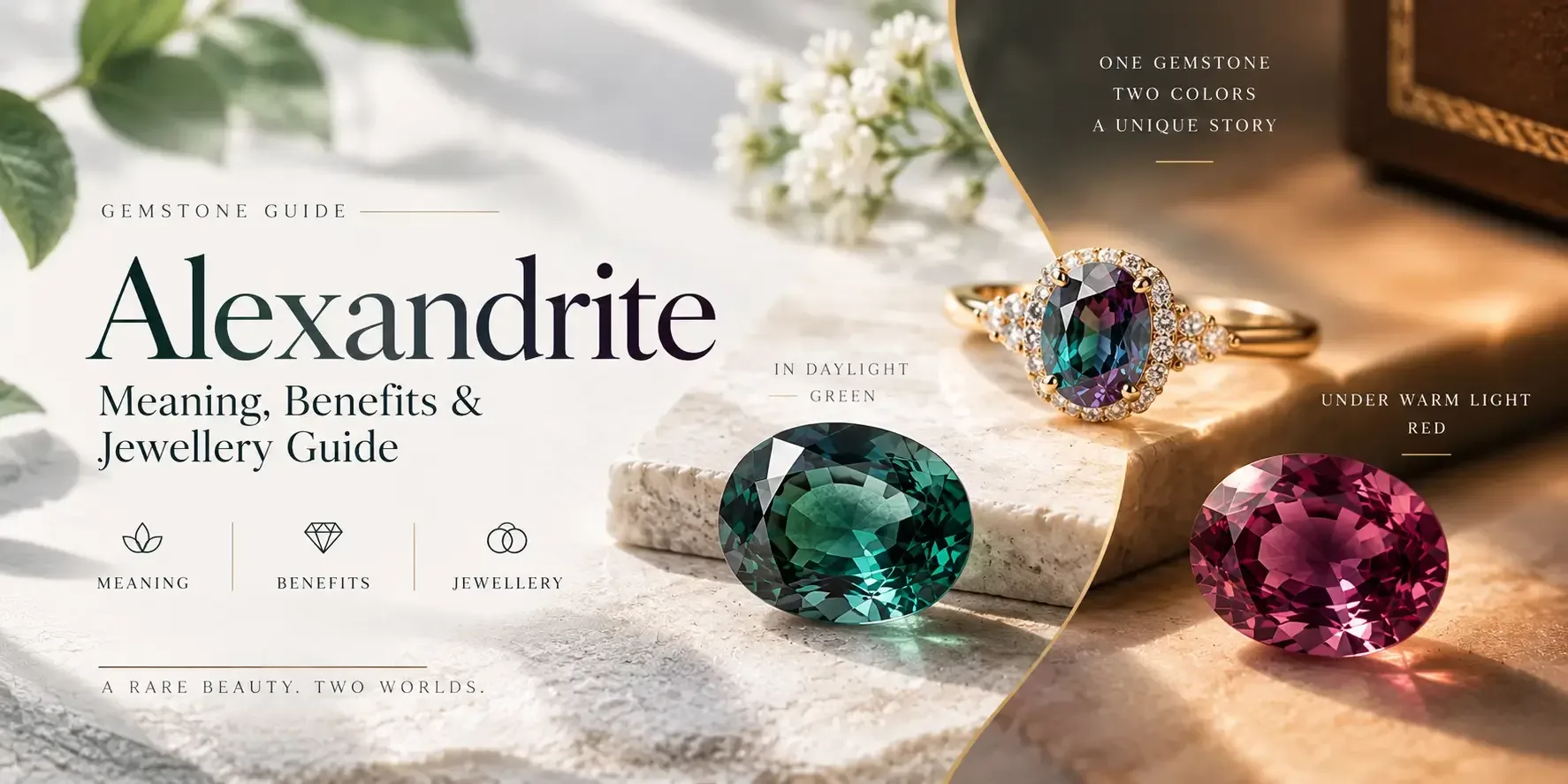
Some gemstones are beautiful because of their colour. Alexandrite is special because its colour appears to change with the light. In daylight a fine alexandrite can look green to bluish green, while under incandescent light it can shift toward red, purplish red or reddish tones.
This unusual colour-changing effect has made alexandrite one of the most fascinating and sought-after varieties of chrysoberyl. It is also a June birthstone, and it is known for its rarity — especially in larger sizes and in stones with a strong, attractive colour change.
If you are thinking about buying alexandrite for a ring, pendant, earrings or as a loose alexandrite gemstone, understanding its colour, origin, treatments, durability and certification will help you make a more informed choice.
Alexandrite at a Glance
| Property | Details |
|---|---|
| Mineral Family | Chrysoberyl |
| Chemical Formula | BeAl₂O₄ |
| Mohs Hardness | 8.5 |
| Toughness | Excellent, with no cleavage |
| Birthstone | June (with pearl and moonstone) |
| Anniversary Stone | 55th Wedding Anniversary |
| Daylight Colour | Green to bluish green |
| Incandescent Colour | Red to purplish red |
| Crystal System | Orthorhombic |
| Notable Sources | Russia (Ural Mountains), Brazil, Sri Lanka, East Africa |
What Is Alexandrite Stone?
Alexandrite is a rare colour-changing variety of the mineral chrysoberyl. Its most distinctive feature is the alexandrite effect — a noticeable change in colour when the gemstone is viewed under different types of light.
A fine stone may appear:
- Green to bluish green in daylight
- Red to purplish red under incandescent light
- Different shades again depending on the light source and viewing conditions
The colour change happens because of the way alexandrite absorbs different parts of visible light. Trace amounts of chromium in the crystal structure play an important role in this unusual optical effect.
This is what gives alexandrite its famous character: one gemstone can show two very different personalities.
Why Is Alexandrite So Rare?
Alexandrite has always been considered a rare gemstone, but its availability varies greatly depending on quality.
The original major deposits were discovered in Russia's Ural Mountains in the 1830s. Those early Russian stones became particularly famous for their strong green-to-red colour change.
Today, alexandrite is also found in locations including Brazil, Sri Lanka and East Africa. Fine-quality material remains uncommon, particularly when the gemstone combines a strong colour change with attractive colours and good clarity. Large natural alexandrites with excellent colour change are especially difficult to find.
This combination of rarity and optical beauty is one reason fine alexandrite can command high prices.
Alexandrite Meaning and Symbolism
Alexandrite is often associated with change, balance and transformation because of its ability to show different colours under different lighting.
Its two contrasting appearances can also be read as a symbol of two sides coming together — something that makes the gemstone particularly meaningful for personal jewellery and special occasions.
These meanings are symbolic rather than scientific, but they have contributed to alexandrite's appeal as a sentimental gemstone.
Alexandrite as a June Birthstone
Alexandrite is one of the three recognised birthstones for June, alongside pearl and moonstone.
For someone born in June, alexandrite offers something quite different from traditional birthstone choices. Instead of having a single fixed appearance, the gemstone can change noticeably with the lighting.
Alexandrite is also traditionally associated with the 55th wedding anniversary, making it an interesting choice for milestone jewellery.
What Makes a Good Alexandrite?
Not every alexandrite shows the same quality of colour change. When evaluating a stone, several factors matter.
1. Colour Change
For alexandrite this is the single most important characteristic. Fine examples show a strong transition from bluish green or green in daylight to red or purplish red in incandescent light. A stronger, more attractive colour change is generally more desirable.
When buying alexandrite, do not judge the gemstone under only one light source. Ask to see it under:
- Natural daylight
- LED or fluorescent lighting
- Incandescent or warm indoor lighting
The difference can be remarkable.
2. Colour Quality
The colours themselves matter as much as the change between them. Fine alexandrite is generally valued for attractive, reasonably saturated green and red hues. Stones that are extremely light may lack visual intensity, while stones that are too dark can appear almost black and lose some of their brightness.
3. Clarity
Fine alexandrites can be relatively clean to the eye, although natural inclusions are common in gemstones. A stone that combines strong colour change with good transparency is particularly desirable.
Some alexandrites contain long, parallel inclusions that create a cat's-eye effect, known as chatoyancy. Cat's-eye alexandrite is extremely unusual and is a separate collector interest within the gemstone — you can see the same optical effect in our cat's eye gemstone collection.
4. Cut
The cut should help the gemstone display its colour and its colour-changing effect. Alexandrites are often fashioned in mixed cuts, combining brilliant-style and step-cut elements. The cutter has to balance the rough material carefully to make the finished gemstone attractive while retaining as much valuable material as possible.
A well-cut stone should have good brightness and should not appear excessively dark. If you are weighing up one shape against another, our guide to oval, cushion and emerald cuts explains how shape affects the way a stone returns light.
5. Carat Weight
Alexandrite is available in a range of sizes, but larger natural stones of fine quality are uncommon. Because high-quality material becomes increasingly difficult to find as size increases, carat weight can have a significant effect on price.
A larger stone is not automatically a better stone, however. Colour change, colour quality, clarity and overall appearance all remain important.
Natural Alexandrite vs Lab-Grown Alexandrite
This is one of the most important things to understand before buying.
Natural Alexandrite
Natural alexandrite formed in the earth. It is rare, particularly in fine qualities and larger sizes. Every stone in our natural alexandrite collection is mined material, never laboratory-grown.
Laboratory-Grown Alexandrite
Laboratory-grown alexandrite is produced in a controlled environment. It can have similar chemical and optical characteristics to natural alexandrite, but it is not mined from the earth.
There are also materials sold as colour-change sapphire, or other alexandrite imitations. These should not be confused with natural alexandrite.
A professional laboratory report can establish whether a gemstone is natural or laboratory-grown, and can identify detectable treatments. GIA, for example, evaluates alexandrite but does not assign it a traditional gemstone grade.
Does Alexandrite Have Treatments?
Alexandrite is usually not treated, although treated examples do exist. This is another reason disclosure matters when you are buying a valuable gemstone.
A laboratory report can indicate whether detectable treatments are present. If a stone has been fracture-filled, for example, its cleaning requirements are different from untreated material. Our guide to untreated versus heated gemstones explains why treatment status affects both value and care.
For a significant purchase, always ask:
- Is the alexandrite natural?
- Is it laboratory-grown?
- Has it been treated?
- Is the colour change natural?
- Is the gemstone accompanied by an independent laboratory report?
Is Alexandrite Durable Enough for Jewellery?
Yes. Alexandrite has a Mohs hardness of 8.5 and excellent toughness, with no cleavage. These properties make it suitable for many types of jewellery, including rings that are worn regularly.
Durability does not mean the gemstone is impossible to damage, however. Like any fine gemstone, alexandrite should be protected from unnecessary impact and from harsh chemicals.
How to Clean Alexandrite Jewellery
For routine cleaning, warm water with mild soap is a safe option for alexandrite. Use a soft brush if necessary, then rinse the gemstone carefully before drying it with a soft cloth.
GIA notes that ultrasonic and steam cleaning are generally safe for alexandrite, but stones with certain treatments — such as fracture filling — should only be cleaned with warm soapy water.
If you are unsure whether your gemstone has been treated, gentle cleaning is the safer choice.
Alexandrite Jewellery Ideas
Alexandrite works beautifully in many jewellery styles, because its appearance changes throughout the day.
Alexandrite Rings
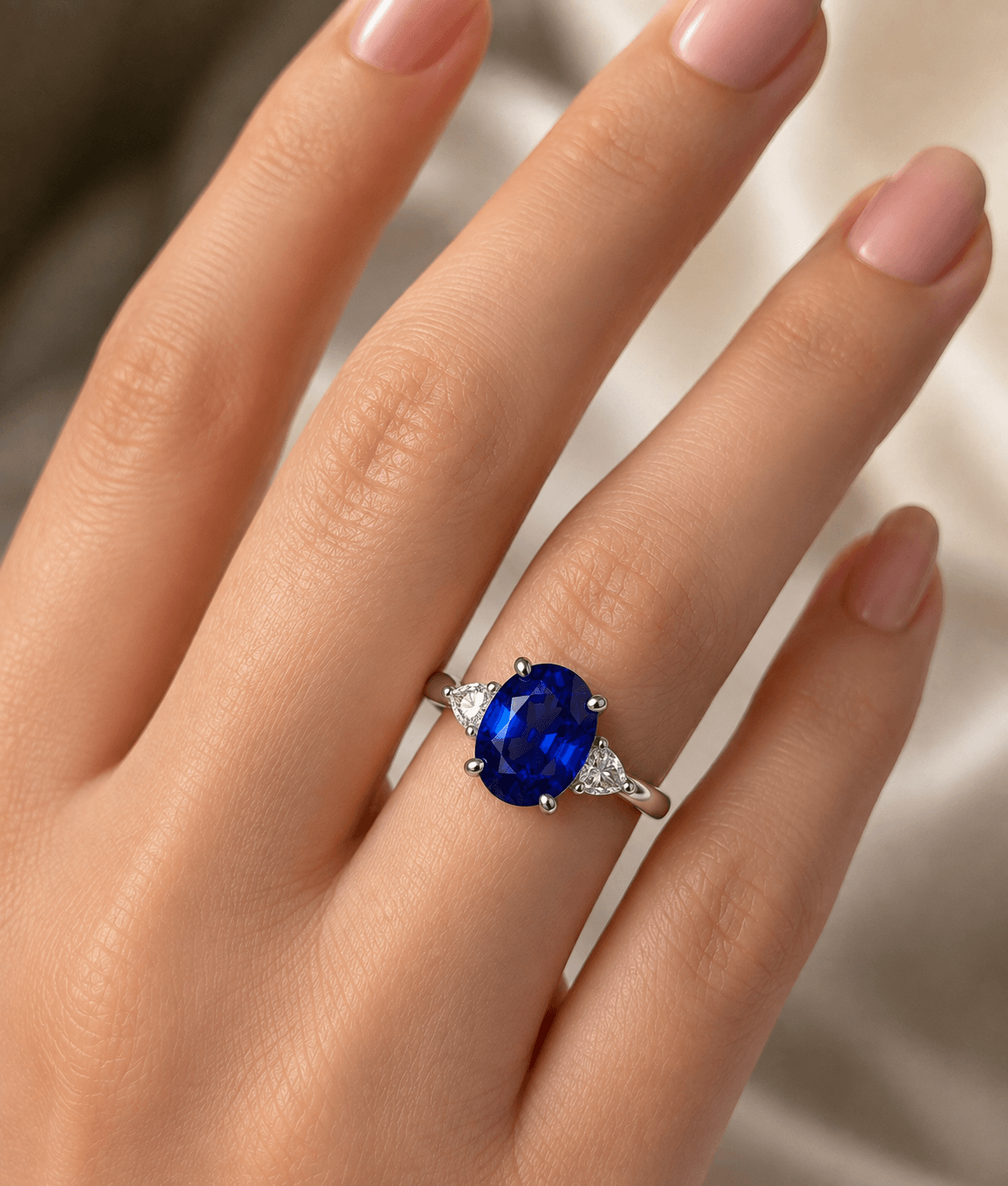
A solitaire alexandrite ring allows the gemstone itself to remain the main focus. An oval, cushion or mixed-cut stone can work particularly well.
Alexandrite Earrings
Matching natural alexandrites can be difficult, because each stone may differ in colour, size and degree of colour change. That makes well-matched pairs particularly special.
Alexandrite Pendants
A pendant is a good way to showcase a slightly larger stone while keeping the design elegant and wearable.
Alexandrite Bracelets
Smaller alexandrites can be incorporated into delicate bracelet designs, either as individual accent stones or as part of a more detailed gemstone arrangement.
How Much Does Alexandrite Cost?
There is no single price for alexandrite. Two gemstones of the same carat weight can have very different values, because their colour change, colour quality, clarity, origin, treatment status and overall appearance may all differ.
In general, fine natural alexandrite with a strong colour change is rare and can be expensive, particularly in larger sizes.
If you are comparing prices, look beyond carat weight alone. A better comparison is:
Natural or laboratory-grown + colour change + colour quality + clarity + cut + treatment + certification + carat weight
If you are thinking about a rare stone as a long-term holding rather than simply as jewellery, our article on whether natural gemstones are a good investment is worth reading first.
How to Buy Alexandrite Online
Buying a rare gemstone online requires a little more attention than buying an ordinary piece of jewellery.
Before purchasing, ask the seller for:
- Clear photographs and videos
- Daylight and indoor-light views
- Exact carat weight
- Measurements
- Natural or laboratory-grown status
- Treatment information
- Origin information, if claimed
- Independent laboratory certification for significant purchases
A video showing the gemstone changing appearance under different light sources is particularly useful.
For a valuable natural alexandrite, an independent laboratory report provides additional confidence about the identity and characteristics of the gemstone. GIA's coloured stone reports can identify whether alexandrite is natural or laboratory-grown, note detectable treatments and, when possible and requested, give an opinion on geographic origin.
If you have a question we have not covered here, our frequently asked questions page covers certification, shipping and returns in more detail.
Frequently Asked Questions About Alexandrite
Is natural alexandrite rare?
Yes. Fine natural alexandrite is considered rare, particularly stones with a strong colour change and good colour quality.
What colour is alexandrite?
Alexandrite can appear green to bluish green in daylight, and red to purplish red under incandescent light.
Is alexandrite a birthstone?
Yes. Alexandrite is one of the three June birthstones, together with pearl and moonstone.
Is alexandrite good for rings?
Yes. With a Mohs hardness of 8.5, excellent toughness and no cleavage, alexandrite is suitable for rings and other jewellery designed for regular wear.
Is alexandrite more valuable than other gemstones?
Not automatically. Value depends on the individual gemstone's quality, rarity, colour change, size, clarity, treatment and other characteristics.
Can alexandrite be laboratory-grown?
Yes. Laboratory-grown alexandrite is available, and it should be clearly disclosed as such.
How should alexandrite be cleaned?
Warm soapy water is a safe cleaning method. If the gemstone has been fracture-filled, avoid ultrasonic and steam cleaning.
Final Thoughts
Alexandrite is a gemstone that rewards a closer look. Its appeal is not simply its colour, but the way that colour responds to its surroundings.
A beautiful natural alexandrite can move from green in daylight to red or purplish red under warm indoor light, creating an effect that few other gemstones can match.
For buyers, the most important things to consider are natural origin, strength of colour change, colour quality, clarity, cut, treatment and certification. Rather than choosing a stone based only on size or price, take the time to understand what you are actually buying.
For someone looking for a rare gemstone with genuine character, alexandrite offers something quite different. You can browse our certified natural alexandrite to see what is currently available.
Related Topics
- Alexandrite
- Natural Alexandrite
- Alexandrite Stone
- Alexandrite Gemstone
- June Birthstone
- Color Change Gemstone
- Natural Gemstones
- Loose Alexandrite
- Alexandrite Jewellery
- Alexandrite Buying Guide
- Rare Gemstones
- Gemstone Certification
- Alexandrite Ring
- Alexandrite Pendant
- Alexandrite Earrings
Ready to find your own gemstone?
Shop Certified Gemstones