Are Natural Gemstones a Good Investment?
Some natural gemstones hold their value remarkably well and others do not. A look at how rarity, colour, treatment, origin and certification decide which is which.
August 31, 2026 · 15 min read
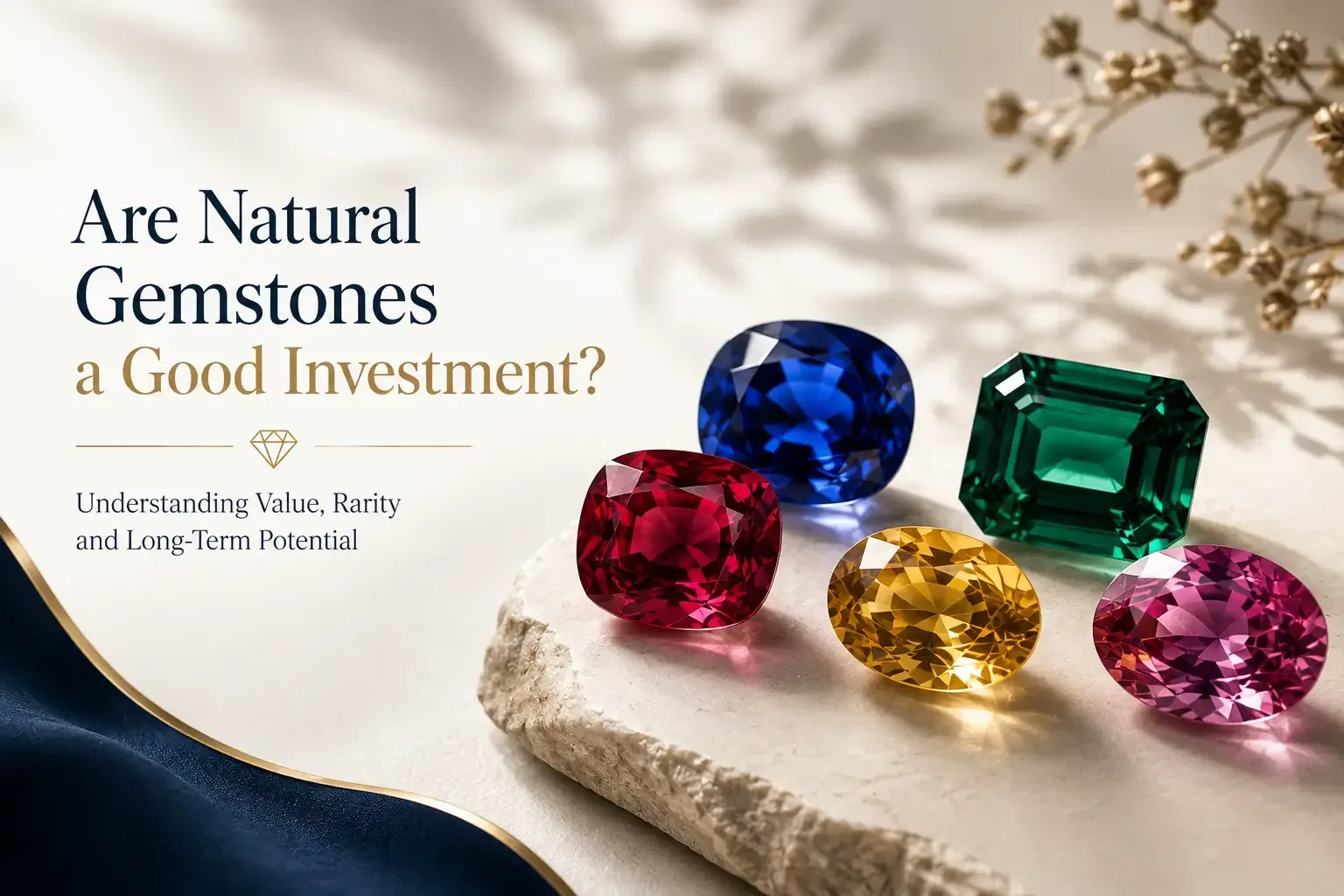
Understanding Rarity, Quality, Certification and Long-Term Value
Natural gemstones have fascinated people for centuries. Some have been passed from one generation to another, while exceptional stones have appeared in major private collections and auctions. This naturally raises an important question for today's buyers:
Are natural gemstones a good investment?
The honest answer is: some can be, but not every natural gemstone is an investment.
A gemstone's value depends on many factors, including its quality, rarity, color, size, origin, treatment, certification, and demand in the market. Two gemstones of the same type and carat weight can have very different values.
For buyers considering a natural sapphire, ruby, emerald, alexandrite, or another fine gemstone, understanding these differences is essential.
This guide explains what can make a gemstone collectible, what affects its value, and what you should consider before purchasing a natural gemstone with long-term value in mind.
What Makes a Natural Gemstone Valuable?
There is no single factor that determines the value of a colored gemstone.
Professional buyers generally consider a combination of characteristics, including:
- Color
- Clarity and transparency
- Cut quality
- Carat weight
- Origin
- Treatment
- Rarity
- Certification
- Current market demand
GIA identifies color as a major value factor for colored gemstones and also highlights origin, size, clarity, shape, and cutting quality as important factors in determining value.
The most important point is that rarity and quality have to exist together.
A large gemstone is not automatically valuable. A rare origin does not automatically make an average stone expensive. And an untreated gemstone is not necessarily better than every treated gemstone.
The overall combination is what matters.
Natural Does Not Automatically Mean Investment Grade
This is one of the most important things a buyer should understand.
A gemstone can be completely natural and still have relatively modest market value.
For example, a natural gemstone may have:
- Pale color
- Low transparency
- Significant inclusions
- Poor cutting
- Common size
- Extensive treatment
Such a stone may be beautiful and perfectly suitable for jewelry, but that does not make it an investment-grade gemstone.
On the other hand, a natural gemstone with exceptional color, rarity, size, provenance, and minimal treatment can attract strong interest from collectors.
Natural is the starting point—not the final measure of value.
Rarity Is One of the Biggest Factors
Rare gemstones naturally attract attention from collectors.
However, rarity can come in different forms.
A gemstone may be rare because of:
- Its color
- Its size
- Its origin
- Its lack of treatment
- Its clarity
- Its unusual optical effect
- Its combination of several desirable characteristics
For example, a small gemstone may be relatively common, while a large stone with the same quality characteristics may be exceptionally rare.
GIA notes that as gemstone size increases into ranges that are uncommon for jewelry, price per carat can rise, particularly when the stone also has superior color and comes from a source known for exceptional material.
Color Often Matters More Than Size
When it comes to colored gemstones, color is usually one of the first things experienced buyers consider.
A gemstone with exceptional color can be considerably more desirable than a larger stone with weak color.
For example:
A vivid blue sapphire may be more valuable than a larger sapphire with grayish or overly dark color.
Similarly, an emerald with rich, attractive green color can command greater interest than a larger emerald with poor transparency and weak color.
GIA describes color in terms of hue, saturation, tone, and uniformity, with the optimal combination varying by gemstone type.
This is why simply searching for the "largest gemstone for the money" is usually not the best approach.
The Importance of Untreated Gemstones
Treatment is another major consideration when evaluating a gemstone for collecting.
Many natural gemstones are routinely treated to improve their color or clarity. Some treatments are widely accepted in the trade, provided they are properly disclosed.
However, exceptional untreated gemstones can be much rarer.
This is particularly relevant for stones such as:
- Sapphire
- Ruby
- Emerald
A fine natural gemstone with no evidence of treatment can attract a premium because comparable untreated material may be difficult to find.
That does not mean every untreated gemstone is automatically valuable.
The stone still needs excellent color, clarity, size, cut, and overall appeal.
Heated vs Unheated Gemstones
Heat treatment is common in the colored gemstone market — our guide to untreated versus heated gemstones explains how it works and how it is detected.
A heated natural gemstone remains natural, but its treatment status can influence its market value.
For example, a fine unheated sapphire with excellent color may command a significant premium over a comparable heated stone.
The difference becomes particularly important when dealing with rare, high-quality gemstones.
For buyers considering a gemstone as a collectible, it is important to know:
What treatment has the stone received?
And more importantly:
Can the treatment status be independently verified?
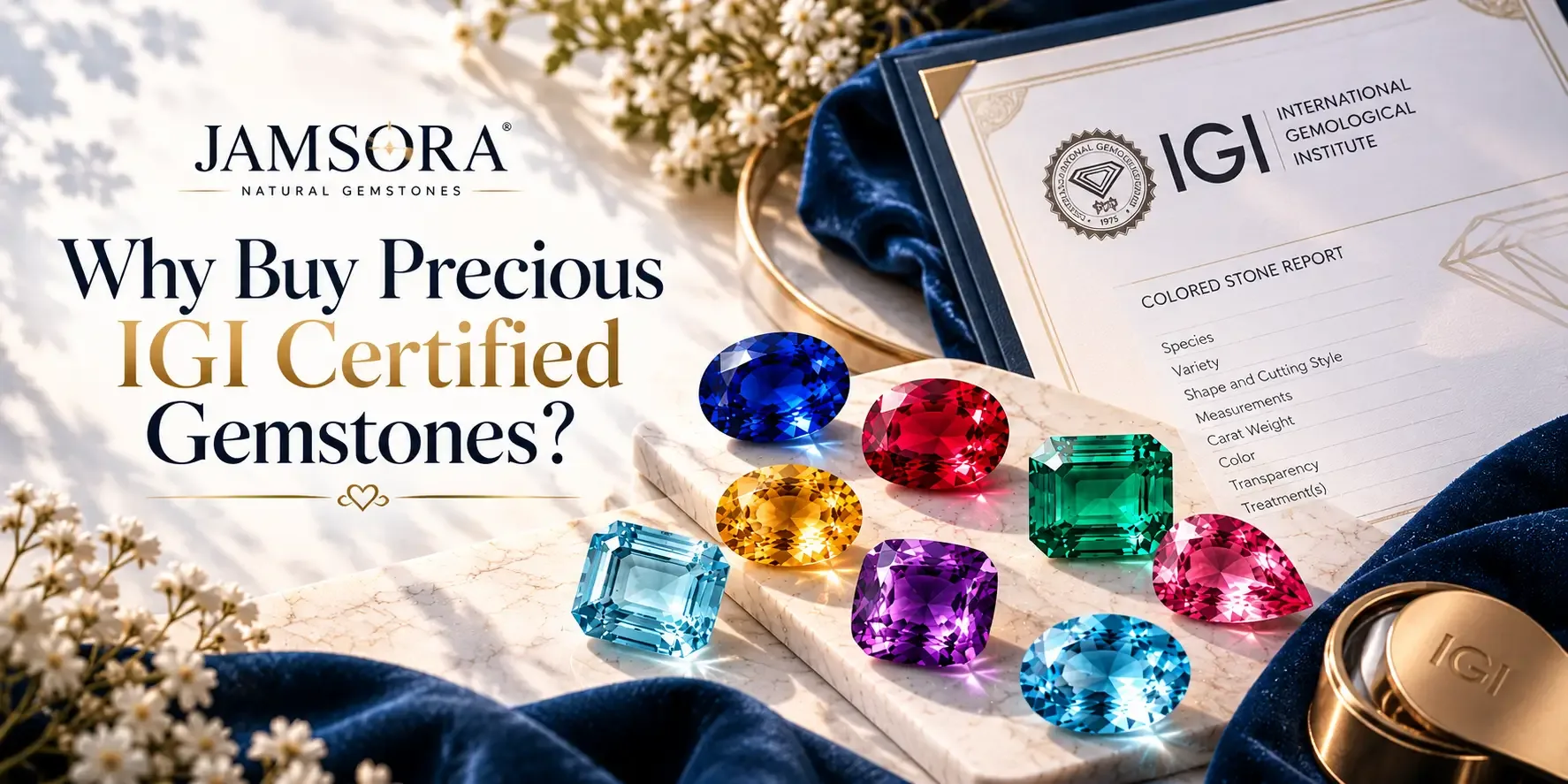
Why Certification Matters
Certification becomes particularly important when purchasing higher-value natural gemstones.
A professional laboratory can examine a gemstone to determine characteristics that are difficult or impossible to confirm simply by looking at the stone.
Depending on the report and laboratory, this may include:
- Gemstone identity
- Natural or laboratory-grown status
- Detectable treatments
- Weight
- Measurements
- Color
- Cutting style
- Geographic origin, when determinable
GIA's colored gemstone reports can identify whether a stone is natural or laboratory-grown, describe detectable treatments, and, where requested, provide an opinion on geographic origin.
For a significant purchase, an independent report can provide an important layer of confidence.
Does Gemstone Origin Affect Investment Value?
It can.
Certain locations have developed strong reputations for particular gemstones.
Examples include:
- Kashmir sapphire
- Burmese ruby
- Colombian emerald
- Sri Lankan sapphire
- Mozambique ruby
But origin should never be considered in isolation.
A gemstone's origin may add value when it is supported by a credible laboratory opinion and the stone itself has exceptional quality.
GIA notes that geographic origin can have a significant effect on the value of some colored gemstones, particularly when the source has a strong reputation for producing rare material.
This is one reason origin reports can become important for high-value stones.
Why Large Gemstones Can Be More Valuable
Size matters, but only when combined with quality.
As a gemstone becomes larger, finding material that maintains excellent color, clarity, and transparency becomes more difficult.
This can create a substantial premium for exceptional larger stones.
However, extremely large gemstones are not automatically better investments.
A large but unattractive gemstone may have a smaller market of potential buyers.
A large gemstone with exceptional color and rarity is a very different proposition.
Which Gemstones Are Considered Collectible?
- There is no fixed list of "investment gemstones."
However, collectors commonly show strong interest in exceptional examples of gemstones such as:
Sapphire
Particularly rare, untreated stones with exceptional color, size, and desirable origin.
Ruby
Fine natural rubies with vivid color, strong transparency, rarity, and minimal treatment can be highly collectible.
Emerald
Exceptional natural emeralds with attractive color, good transparency, and minimal treatment can command strong interest.
Alexandrite
Natural alexandrite with a strong and attractive color-change phenomenon is particularly rare.
Spinel
Fine spinels in exceptional colors and sizes have gained considerable collector interest.
Tourmaline
Certain rare varieties and exceptional colors can attract serious collectors.
The key phrase is exceptional examples.
Not every gemstone within these categories has investment potential.
Why Alexandrite Can Be Interesting to Collectors
Alexandrite is a good example of how rarity and a distinctive characteristic can create collector interest.
Natural alexandrite is known for its color-change phenomenon, with the gemstone displaying different colors under different lighting conditions.
Fine natural material with a strong color change is considerably rarer than ordinary commercial examples.
This illustrates an important principle:
Unique natural characteristics can contribute significantly to collectibility.
What About Emeralds?
Emerald is another gemstone where quality differences can be dramatic. Our natural emerald buying guide covers this in detail.
Natural emeralds commonly contain inclusions, and these characteristics are part of their natural identity.
For collectors, the most desirable stones can combine:
- Rich green color
- Good transparency
- Attractive appearance
- Fine cutting
- Significant size
- Minimal treatment
- Reliable documentation
Emerald treatment is particularly important because clarity enhancement is common in the market.
A buyer should understand whether an emerald has been treated and to what extent.
What About Sapphire?
Sapphire is one of the most interesting gemstones for collectors because of its wide range of colors and origins. See our blue sapphire buying guide for how to judge colour.
Blue sapphire is particularly important, but fancy-color sapphires can also be highly desirable.
Collector interest may increase when a sapphire combines:
- Exceptional color
- Large size
- Natural origin
- No evidence of heat
- Desirable origin
- Excellent transparency
- Fine cutting
- Strong laboratory documentation
What About Ruby?
Fine ruby is one of the world's most sought-after colored gemstones. Our natural ruby buying guide explains what separates fine material from commercial goods.
For a collector, particularly important characteristics can include:
- Vivid red color
- Strong saturation
- Good transparency
- Natural origin
- Minimal treatment
- Significant size
- Desirable origin
- Independent certification
A fine untreated ruby can be extremely rare, but again, untreated alone does not guarantee investment value.
The entire gemstone must be evaluated.
Are Treated Gemstones Worth Buying?
Absolutely—if you are buying them for the right reason.
A treated gemstone can be:
- Beautiful
- Durable
- Affordable
- Suitable for everyday jewelry
Heat-treated sapphires and rubies, for example, are widely available and can offer excellent beauty at a lower price than comparable untreated stones.
The important distinction is between buying for enjoyment and buying primarily for collectibility.
If your goal is jewelry, a beautiful treated gemstone may be an excellent choice.
If your goal is collecting, treatment status becomes much more important.
What Makes a Gemstone More Collectible?
For serious collectors, a combination of the following can make a gemstone particularly interesting:
Exceptional Color
The gemstone displays an unusually desirable color for its species.
Strong Transparency
The stone has attractive transparency without excessive cloudiness.
Large Size
The gemstone is significantly larger than typical examples while maintaining quality.
Minimal or No Treatment
The gemstone has little or no enhancement.
Desirable Origin
The origin is independently supported and carries significance in the market.
Distinctive Characteristics
The gemstone may display unusual phenomena such as:
- Color change
- Chatoyancy
- Exceptional fluorescence
- Rare color
Excellent Cutting
The gemstone has been cut to maximize its natural beauty — see how oval, cushion and emerald cuts compare.
Strong Documentation
Reliable laboratory documentation supports important claims about the stone.
What You Should Not Do
If you're considering a gemstone purchase as a long-term collectible, avoid buying simply because someone tells you:
- "This gemstone will definitely increase in value."
No one can guarantee that.
Gemstone markets can change, and resale depends on:
- Quality
- Rarity
- Market demand
- Documentation
- Buyer interest
- Economic conditions
- Selling channel
A gemstone should not be presented as a guaranteed financial investment.
Gemstones vs Traditional Financial Investments
Natural gemstones are very different from assets such as stocks, bonds, or real estate.
A gemstone does not generate:
- Interest
- Dividends
- Rental income
Its potential value comes from the gemstone itself and what buyers are willing to pay for it in the future.
There can also be additional costs related to:
- Certification
- Insurance
- Storage
- Jewelry setting
- Selling commissions
For this reason, a gemstone should generally be considered a specialized collectible asset, not a replacement for a diversified financial portfolio.
Liquidity Is an Important Consideration
One of the biggest differences between gemstones and many financial investments is liquidity.
If you need to sell a stock, there is usually an established market and transparent pricing mechanism.
Gemstones work differently.
The price you paid for a gemstone does not necessarily equal the price you can immediately receive when selling it.
Finding the right buyer may take time.
This is why anyone purchasing a gemstone primarily for its future value should think carefully about the resale market.
How to Buy a Natural Gemstone With Long-Term Value in Mind
If you're considering a higher-value natural gemstone, take your time.
Step 1: Decide Your Budget
Never buy beyond an amount you are comfortable holding for the long term.
Step 2: Choose the Gemstone
Start with a gemstone that has genuine rarity and collector interest.
Step 3: Study Quality
Learn about:
- Color
- Clarity
- Cut
- Carat
- Origin
- Treatment
Step 4: Compare Multiple Stones
Don't buy the first gemstone you see.
Compare several stones within the same category.
Step 5: Verify Certification
For a significant purchase, consider an independent laboratory report.
Step 6: Check Treatment
Make sure treatment information is clearly disclosed.
Step 7: Buy From a Reputable Seller
Look for transparency rather than exaggerated promises.
How Much Should You Spend?
There is no universal amount.
A good approach is to divide gemstones into three broad purposes:
Jewelry Purchase
Your priority is beauty, durability, and personal preference.
Treatment may be perfectly acceptable.
Collector Purchase
Your priority shifts toward rarity, quality, provenance, and documentation.
High-Value Acquisition
You should consider professional advice, independent certification, provenance, insurance, and the potential resale market.
The more money involved, the more important independent verification becomes.
Should You Buy Loose or Set Gemstones?
For collectors, loose gemstones often provide greater flexibility.
A loose gemstone can be:
- Examined more easily
- Independently certified
- Stored as a collector's stone
- Set into jewelry later
- Resold without being tied to a particular jewelry design
For someone building a gemstone collection, this can be a practical approach.
Why Buying From a Trusted Seller Matters
The gemstone market relies heavily on trust.
A reputable seller should clearly disclose:
- Natural or laboratory-grown status
- Treatment
- Weight
- Measurements
- Origin information where available
- Certification
- Return terms
GIA emphasizes that treatments can sometimes be difficult to detect without specialized examination and that treatment disclosure is important to prevent buyers from assuming a gemstone has greater natural value than it actually does.
That transparency is especially important when purchasing a high-value gemstone online.
A Simple Checklist for Potentially Collectible Gemstones
Before purchasing, ask yourself:
- Is the gemstone natural?
- Is the color exceptional?
- Is the gemstone transparent and attractive?
- Is the cut well executed?
- Is the size unusual for its quality?
- Is the treatment clearly disclosed?
- Is the origin independently documented if it matters?
- Does the gemstone have a reputable laboratory report?
- Is the price reasonable compared with comparable stones?
- Would I still want this gemstone if its value did not increase?
That last question is particularly important.
If the answer is yes, you're buying something you genuinely appreciate rather than simply speculating on future prices.
So, Are Natural Gemstones a Good Investment?
Some natural gemstones can be good long-term collectibles, but they should not be treated as guaranteed investments.
The strongest candidates are generally exceptional stones with a combination of:
- Rarity
- Excellent color
- Strong transparency
- Significant size
- Minimal treatment
- Desirable origin
- Excellent cutting
- Reliable certification
- Established collector demand
For most buyers, the best approach is to purchase a gemstone because it has real beauty and rarity, while viewing any future appreciation as a possibility rather than a promise.
A beautiful natural gemstone can give you something that many financial assets cannot: the ability to own, appreciate, and eventually pass down a tangible piece of nature.
Final Thoughts
Natural gemstones have a unique place between jewelry and collectibles.
A beautiful gemstone can be enjoyed today, worn as jewelry tomorrow, and potentially passed down to the next generation. But not every gemstone will become more valuable over time.
The difference often comes down to quality, rarity, treatment, documentation, and demand.
If you're considering a gemstone for its long-term collectible potential, take your time. Study the stone, understand its treatment history, verify important claims through a reputable laboratory, and compare it with similar gemstones before making a decision.
Most importantly, don't let promises of future profits make the decision for you.
Buy quality. Buy rarity. Buy with proper documentation. And buy a gemstone you would be happy to own even without a guaranteed financial return.
At JAMSORA, the focus should always be on helping customers understand the gemstone before they buy it—because an informed buyer is more likely to choose a stone that remains meaningful long after the purchase. You can browse our collection of certified loose gemstones, every one natural, untreated and IGI certified.
Frequently Asked Questions
Are natural gemstones a guaranteed investment?
No. Gemstone values can rise or fall, and there is no guaranteed return. Exceptional natural gemstones may have strong collector demand, but future appreciation is never certain.
Which gemstones have the strongest collector interest?
Exceptional natural rubies, sapphires, emeralds, alexandrite, spinel, and certain rare varieties of tourmaline can attract serious collectors. Quality and rarity are more important than the gemstone name alone.
Are untreated gemstones better investments?
Fine untreated gemstones can command premiums because they are rare, but untreated status alone does not make a gemstone a good investment.
Does gemstone origin affect value?
It can. Certain origins are associated with particularly desirable material, but origin should be supported by reliable documentation and considered alongside the gemstone's actual quality.
Is a certified gemstone more valuable?
Certification itself does not automatically make a gemstone more valuable. However, a reputable laboratory report can provide important information about identity, treatment, and sometimes origin, helping buyers evaluate a high-value stone with greater confidence.
Should I buy gemstones instead of stocks or real estate?
No asset should be chosen simply because it is expected to appreciate. Gemstones are specialized collectibles and have different risks, costs, and liquidity from traditional financial investments.
Is a large gemstone automatically more valuable?
No. Size is only one factor. Color, clarity, transparency, treatment, origin, and cutting quality can have a major impact on value.
Are heated sapphires and rubies worth buying?
Yes. Heated gemstones can be beautiful and valuable, particularly when the treatment is properly disclosed. They are often more affordable than comparable untreated stones.
What should I look for in an investment-grade gemstone?
Look for an unusual combination of excellent color, transparency, rarity, size, minimal treatment, desirable origin when independently established, fine cutting, and strong documentation.
Related Topics
- Natural Gemstones
- Gemstone Investment
- Natural Gemstone Investment
- Investment Grade Gemstones
- Rare Gemstones
- Collectible Gemstones
- Gemstone Value
- Gemstone Rarity
- Gemstone Quality
- Untreated Gemstones
- Certified Gemstones
- Gemstone Certification
- Gemstone Collecting
- Fine Gemstones
- Loose Gemstones
Ready to find your own gemstone?
Shop Certified Gemstones