Gemstone Shape Guide: Which Cut Is Right for You?
Round, oval, cushion, emerald cut and more. How each gemstone shape looks, how it wears day to day, and how it affects what you pay.
September 25, 2026 · 8 min read
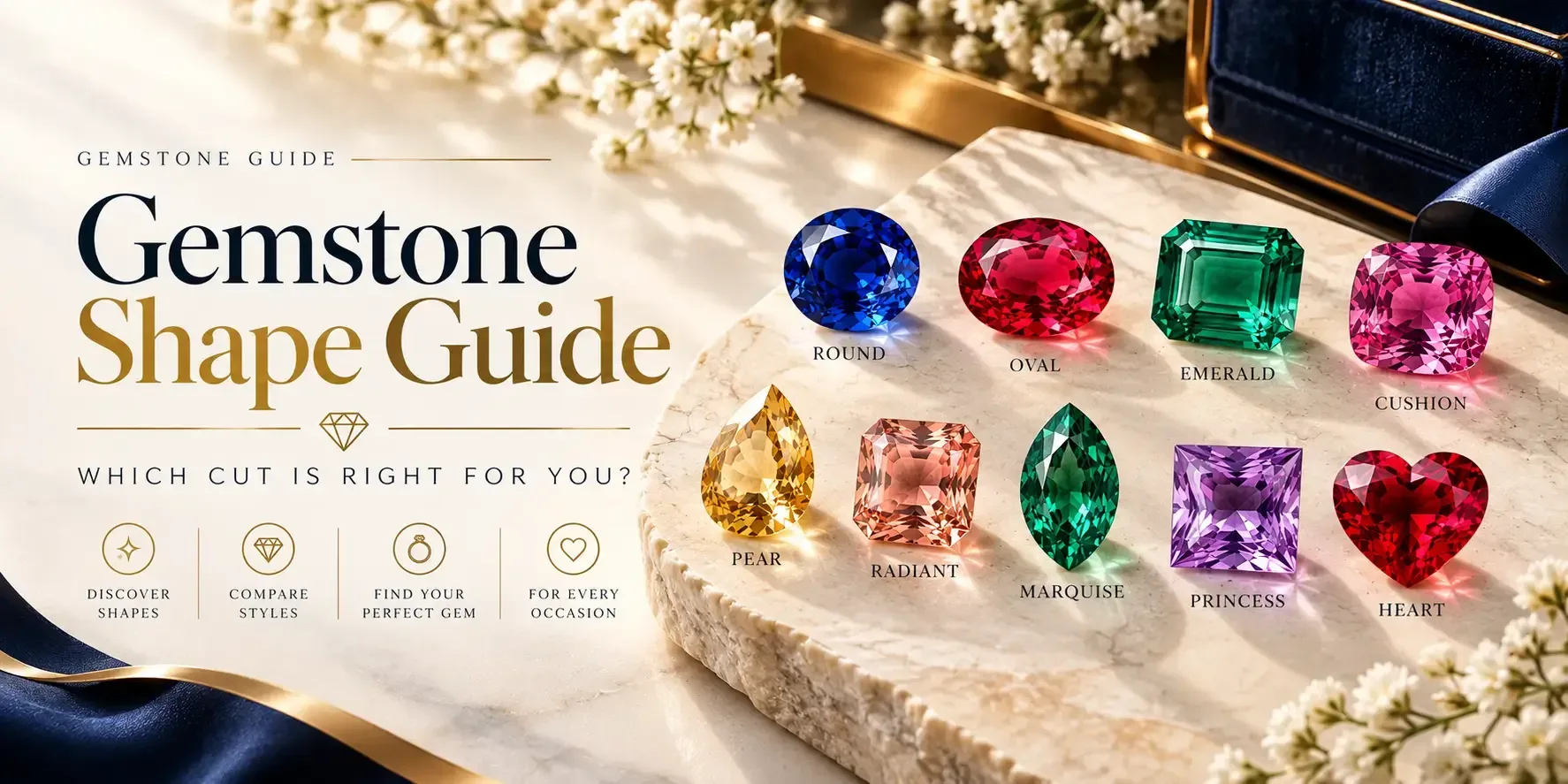
Ask most people what matters most in a gemstone and they will say color. They are right, but the gemstone's shape comes a close second. It decides how big the stone looks on your hand, how much sparkle you see, how well it hides small inclusions, and sometimes how much you pay per carat.
This gemstone shape guide covers the eight most popular cuts: what each one does well, where it falls short, and who it tends to suit. Five of them, round, oval, cushion, emerald cut and pear, are available to browse in our shop, so you can go straight from reading about a shape to seeing real stones in it.
Shape and cut are not quite the same thing
Most people use the two words to mean the same thing, and that is fine in conversation. Strictly speaking, the shape is the outline you see from above: round, oval, pear. The cut is how the facets are arranged, proportioned and polished.
Facet styles fall into two broad families:
- Brilliant cuts have many triangular and kite-shaped facets that break light into lots of small flashes. Round, oval, cushion, pear, marquise, princess and radiant stones are usually cut this way.
- Step cuts have long, flat facets that run parallel to the edges, like a staircase. The emerald cut is the classic example. You get fewer flashes but broad, mirror-like planes of color.
Colored gemstones add one more factor. Cutters work from rough crystals that are rarely a neat shape, and their first job is to keep as much weight and color as they can. That is why so many sapphires and rubies are cut as ovals and cushions: those outlines follow the natural form of the crystal. Cutting a round from the same rough can waste far more material, which is one reason round colored stones often cost more per carat.
Round cut
The round brilliant is designed to return as much light as possible. Its symmetrical facets give the most even sparkle of any shape, and it suits almost every setting, from a solitaire to a halo to a simple pair of studs.
Best for: classic engagement rings, earrings and anyone who wants a look that will never date.
Keep in mind: round colored stones are less common and usually priced higher per carat, because more of the crystal is cut away.
Oval cut
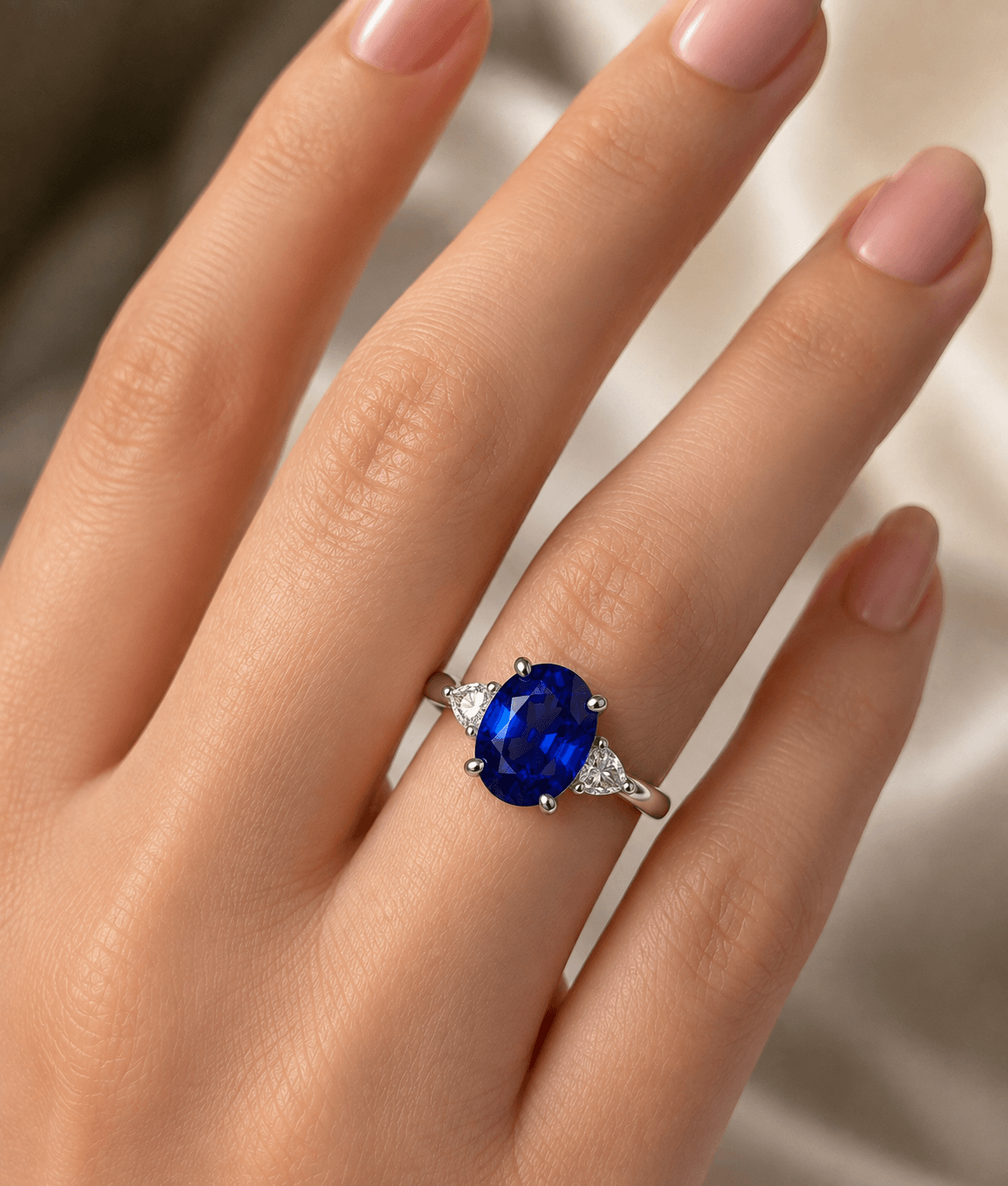
If we had to recommend one shape to most buyers, it would be the oval. It keeps much of the round's brilliance, looks larger than a round of the same weight, and its longer outline makes fingers look slimmer. It is also the most common shape in our collection, especially for sapphires.
Watch for the "bow tie", a darker band across the middle of the stone. Almost every oval has a little of it. A faint one is normal. A heavy one that stays dark as you tilt the stone is worth avoiding.
Best for: everyday rings, pendants, and getting more visible size for your budget.
Keep in mind: judge the bow tie from photos or video, not from the carat weight alone.
Cushion cut
A cushion is a square or slightly rectangular outline with rounded corners, a little like a pillow. It has been popular for well over a century and remains one of the most common shapes for fine sapphires and rubies. Its larger facets show off saturated color, and the soft corners are less likely to chip.
Best for: vintage-style rings, rich colored stones, and people who are hard on their jewelry.
Keep in mind: cushions often carry more weight in the base, so they can look slightly smaller from above than an oval of the same carat weight.
Emerald cut
The emerald cut is a rectangle with trimmed corners and step facets. It is calm and elegant rather than flashy. Instead of sparkle you get long, "hall of mirrors" reflections and a very clear view into the stone.
It was developed for emeralds for good reason. The trimmed corners protect a gem that can be brittle, and the open facets suit a stone valued above all for its color. That openness works both ways, though: inclusions and uneven color are easier to see, so the stone itself needs to be clean.
Best for: emeralds, aquamarine, stones with even color, and understated or art deco designs.
Keep in mind: look closely at clarity. There is nowhere for flaws to hide.
Torn between the three most popular shapes? Our side-by-side comparison of oval vs cushion vs emerald cut goes into more detail.
Pear shape
Part round and part marquise, the pear (or teardrop) is graceful and a little unexpected. It is lovely in pendants and drop earrings. On a ring it usually points toward the fingertip, though pointing it toward the wrist is a nice twist.
Best for: pendants, earrings and a ring that stands out from the crowd.
Keep in mind: the point is the weakest spot, and a V-shaped prong over the tip protects it. Symmetry matters too: the shoulders should be even and the curve smooth.
Marquise cut
The marquise is a long boat shape with a point at each end. It gives the most visible size for its weight of any shape here, and it makes the finger look long and slender. It suits bold rings and vintage-inspired pieces.
Best for: maximum visible size, statement rings and east-west settings.
Keep in mind: two points means two places that can chip, so protect both. Check for a bow tie, as you would with an oval.
Princess cut
The princess is a square brilliant with sharp corners. It has a crisp, modern look and plenty of sparkle. You will see it more often in diamonds than in colored stones, but it works well in a clean, contemporary setting.
Best for: modern designs, channel-set bands and a geometric look.
Keep in mind: all four sharp corners need to be covered by prongs, especially on a ring you wear every day.
Radiant cut
The radiant combines the outline of an emerald cut with brilliant-style faceting. You get trimmed, chip-resistant corners and a lot of sparkle. It is a strong choice for colored stones, because the extra facets can make the color look more vivid and help mask small inclusions.
Best for: people who like the emerald cut's outline but want more life, and for bright colored stones.
Keep in mind: radiants are often cut deep, so compare their measurements from above rather than carat weight alone.
Gemstone shapes compared
| Shape | Sparkle | Looks larger than its weight | Hides inclusions | Weak points |
|---|---|---|---|---|
| Round | Very high | No (the baseline) | Well | None |
| Oval | High | Yes | Well | None |
| Cushion | High | Slightly less | Well | None |
| Emerald cut | Low, with mirror-like flashes | Slightly | Poorly | None (corners are trimmed) |
| Pear | High | Yes | Well | One point |
| Marquise | High | The most | Well | Two points |
| Princess | High | No | Well | Four corners |
| Radiant | High | Slightly | Well | None (corners are trimmed) |
How to choose the right gemstone shape
There is no wrong answer, but a few questions narrow things down quickly.
- How will you wear it? For a ring you wear every day, shapes without sharp points (round, oval, cushion, emerald and radiant) are the easiest to live with. Pointed shapes are fine too if the setting protects them. If you are planning an engagement ring, read our guide on whether sapphire is a good choice for engagement rings.
- What is your budget? Ovals, pears and marquise give the most visible size for the money. In colored stones, rounds usually cost the most per carat.
- How clean is the stone? If it has visible inclusions, a brilliant-faceted shape will hide them far better than a step cut.
- What do you want to see? For sparkle, choose a brilliant shape. For deep, calm color, an emerald cut or cushion shows it best.
- What is your style? Rounds and ovals feel classic, cushions and emerald cuts lean vintage, princess and radiant look modern, and pears and marquise make a statement.
Your hand is worth considering too. Longer shapes such as oval, pear and marquise make shorter fingers look longer. On long, slim fingers almost anything works, and wider shapes like round and cushion look especially balanced.
Frequently asked questions
Which gemstone shape looks the biggest?
Marquise, oval and pear shapes look the largest for their carat weight, because more of the stone's weight is spread across the top rather than hidden in the base.
Which gemstone shape sparkles the most?
The round brilliant returns the most light. Oval, cushion and radiant cuts come close. Step cuts such as the emerald cut trade sparkle for broad flashes of color.
What is the most durable shape for everyday wear?
Shapes without sharp points, such as round, oval, cushion, emerald and radiant, are the least likely to chip. Pear, marquise and princess cuts are fine for daily wear as long as their points or corners are protected by the setting.
Why are round colored gemstones more expensive?
Colored gemstone crystals are rarely round, so cutting a round stone usually means losing more of the rough. That extra loss, and the lower supply that comes with it, pushes up the price per carat.
One last tip
Carat weight only tells part of the story. Two ovals of the same weight can look quite different depending on their proportions and how the color sits in the stone. Compare the measurements in millimeters, watch the video when there is one, and if you are unsure, get in touch with us. We are happy to send extra photos or help you compare a few stones side by side.
When you are ready, browse all our loose gemstones and use the shape filter to narrow things down.
Related Topics
- gemstone shapes
- gemstone cuts
- types of gemstone cuts
- best gemstone shape
- gemstone cut guide
- oval gemstone
- cushion cut gemstone
- emerald cut gemstone
- pear shaped gemstone
- round gemstone
- marquise gemstone
- gemstone shapes for rings
- best gemstone cut for engagement ring
- natural loose gemstones
Ready to find your own gemstone?
Shop Certified Gemstones