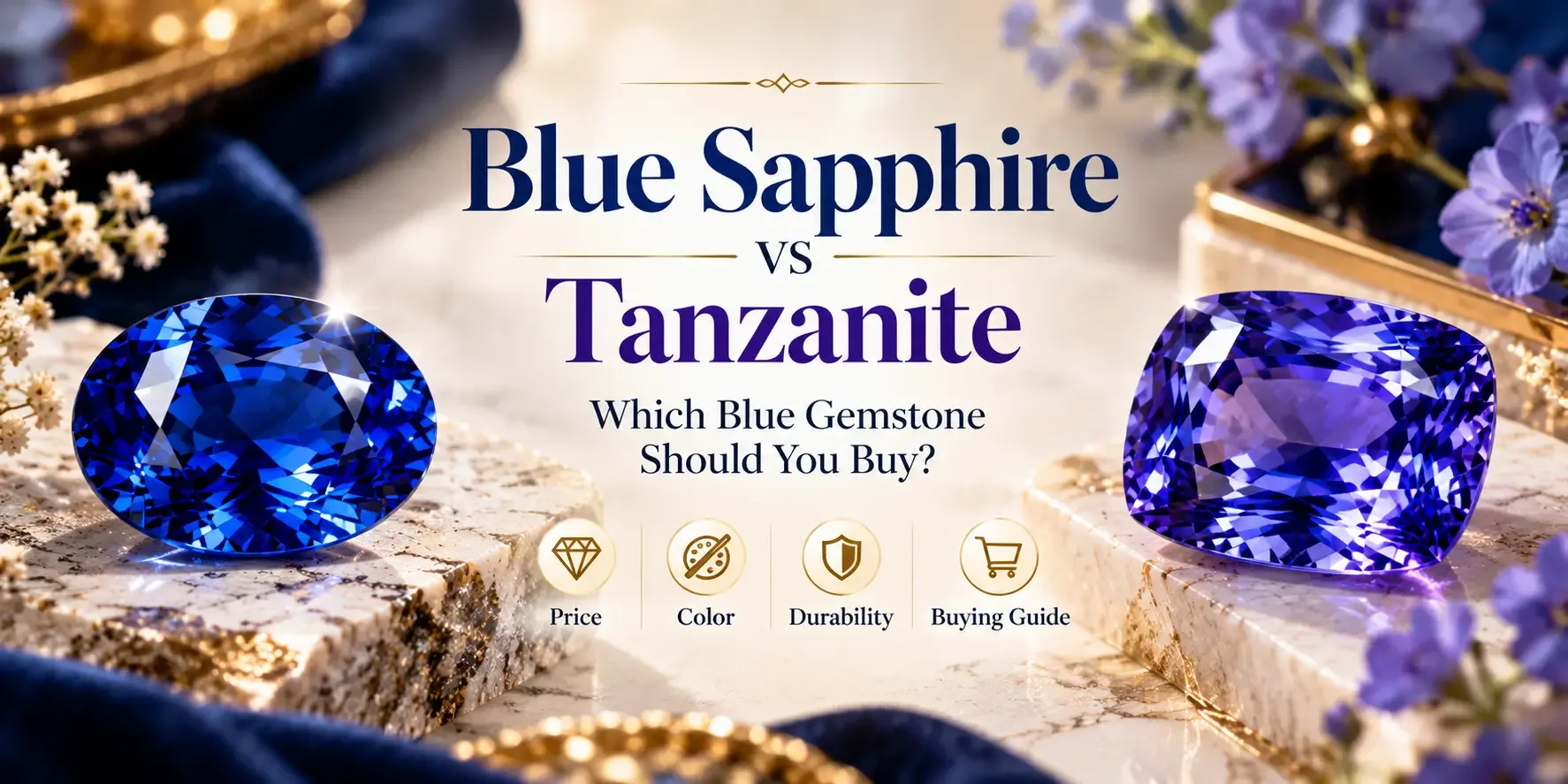
Blue Sapphire vs Tanzanite: Which Blue Gemstone Should You Buy?
Discover the differences in color, rarity, price, durability, and beauty before choosing your perfect blue gemstone.
October 30, 2026 · 15 min read
Blue gemstones have always held a special place in fine jewelry. Their rich colors, elegant appearance, and timeless appeal make them popular choices for engagement rings, anniversary gifts, custom jewelry, and personal collections.
Among the most admired blue gemstones are natural blue sapphire and tanzanite. At first glance, the two can look remarkably similar: both can display beautiful blue tones, exceptional transparency, and captivating brilliance. However, they differ significantly in mineral composition, durability, rarity, treatment, and suitability for everyday jewelry.
Blue sapphire is celebrated for its remarkable hardness and classic royal-blue appearance, while tanzanite is admired for its distinctive blue-violet color and limited geographic source. In this buying guide, we'll compare them side by side to help you make an informed decision.
What Is Blue Sapphire?
Blue sapphire is a precious gemstone belonging to the corundum mineral family, the same mineral as ruby. Its blue color is primarily caused by trace amounts of iron and titanium within the crystal structure.
Natural blue sapphires occur in a wide variety of shades, from soft pastel blue to rich royal blue and deep midnight blue. The most desirable stones display vivid, evenly distributed color with excellent transparency and an attractive cut.
Where Are Natural Blue Sapphires Found?
Blue sapphires are mined in several parts of the world, including:
- Sri Lanka
- Madagascar
- Myanmar
- Australia
- Thailand
- Kashmir (historically; its classic mines are largely exhausted)
- Other sapphire-producing regions
Each region can produce gemstones with different characteristics, although color and quality vary considerably within every source. Kashmir sapphires are historically admired for their velvety blue appearance, while Sri Lankan sapphires are known for a broad range of attractive blue shades.
A gemstone's origin can influence its market value, but origin alone does not guarantee superior quality.
Why Is Blue Sapphire Popular?
- Exceptional durability: with a hardness of 9 on the Mohs scale, sapphire is highly resistant to scratching.
- Timeless appearance: rich blue sapphire complements both traditional and modern jewelry.
- Versatile designs: it works beautifully in engagement rings, earrings, pendants, and other fine jewelry.
- Wide selection: natural sapphires are available in numerous shapes, sizes, and shades of blue.
- Long-standing heritage: sapphire has been associated with royalty, wisdom, and loyalty throughout history.
These qualities make blue sapphire a strong choice for buyers looking for a beautiful gemstone that can also withstand regular wear. Our blue sapphire buying guide goes into how to judge one in detail.
What Is Tanzanite?
Tanzanite is the blue-to-violet variety of the mineral zoisite. Unlike sapphire, which occurs in several countries, commercially mined tanzanite comes from a small area in northern Tanzania near Mount Kilimanjaro. This limited source makes tanzanite particularly distinctive in the colored gemstone market.
Tanzanite is admired for its extraordinary color, which may appear blue, violet, or purplish-blue depending on the gemstone and lighting conditions.
What Makes Tanzanite Special?
One of tanzanite's most fascinating characteristics is pleochroism: the gemstone can display different colors when viewed from different crystal directions. A well-cut tanzanite may show beautiful combinations of blue and violet, creating a distinctive appearance.
Tanzanite is also the modern birthstone for December, making it a meaningful option for birthday jewelry.
Why Do Buyers Love Tanzanite?
- Distinctive blue-violet color
- Limited geographic origin
- Attractive transparency and brilliance
- Beautiful appearance in pendants and earrings
- Association with December birthdays
- Suitability for distinctive custom jewelry
For buyers seeking a gemstone with an unusual color story, tanzanite can be an appealing choice.
Blue Sapphire vs Tanzanite: Quick Comparison
Although both gemstones can look similar, their physical and commercial characteristics are different.
| Feature | Blue sapphire | Tanzanite |
|---|---|---|
| Mineral family | Corundum | Zoisite |
| Primary color | Blue | Blue to violet-blue |
| Mohs hardness | 9 | 6–7 |
| Toughness | Excellent | Fair to poor |
| Geographic sources | Multiple countries | Northern Tanzania |
| Common treatments | Heating; some other treatments | Heating |
| Everyday ring suitability | Excellent | Requires greater care |
| Birthstone | September | December |
| Price | Wide range; fine stones can be expensive | Wide range; fine stones can be valuable |
| Best suited for | Engagement rings and regular wear | Pendants, earrings, and occasional-wear rings |
Both gemstones can be valuable, but their strengths appeal to different buyers.
Color Comparison: Royal Blue Sapphire vs Violet-Blue Tanzanite
Color is often the first characteristic buyers notice when comparing gemstones.
Blue Sapphire: Classic and Elegant
- Royal blue sapphire: a rich, strongly saturated blue that is highly desirable when it retains good brightness.
- Cornflower blue sapphire: a trade description often associated with an attractive, somewhat softer blue.
- Light blue sapphire: a delicate shade that can look elegant in contemporary jewelry.
- Deep blue sapphire: a darker appearance that creates dramatic contrast, although overly dark stones may appear nearly black in some lighting.
Fine blue sapphires typically have appealing color saturation, balanced tone, and attractive brilliance. You can compare every shade side by side in our natural blue sapphire collection.
Tanzanite: Blue with Violet Undertones
Tanzanite is known for its distinctive violet-blue appearance. Some gemstones appear predominantly blue, while others display more noticeable purple or violet tones. Deeply saturated blue-violet and violet-blue colors are especially desirable.
Tanzanite's pleochroism can make its appearance particularly interesting as the gemstone is viewed from different angles.
Which Gemstone Has Better Color?
There is no universal winner. Choose blue sapphire if you prefer a classic blue gemstone with royal-blue or cornflower-blue tones. Choose tanzanite if you enjoy a blue gemstone with noticeable violet or purple characteristics.
If you love violet tones but want sapphire's durability, a natural purple sapphire is worth a look.
Which Is More Durable: Sapphire or Tanzanite?
Durability is one of the most important differences between these gemstones.
Blue Sapphire Hardness
Blue sapphire ranks 9 on the Mohs hardness scale. It also has excellent toughness and no cleavage, making it a practical gemstone for jewelry exposed to regular wear. This is one reason sapphire is frequently chosen for engagement rings.
Tanzanite Hardness
Tanzanite ranks 6 to 7 on the Mohs hardness scale. It is softer than sapphire and has cleavage, meaning it can be more vulnerable to chipping or breaking when struck.
This does not mean tanzanite cannot be used in rings. However, it is better suited to protective settings and jewelry that is worn carefully.
Which Gemstone Is Better for Everyday Wear?
Blue sapphire is the stronger choice for everyday rings. For an engagement ring worn frequently, sapphire offers an important durability advantage. Tanzanite can still be a beautiful choice for an occasional-wear ring, pendant, or pair of earrings.
Blue Sapphire vs Tanzanite: Which Is Rarer?
Rarity is an important consideration, but it needs to be understood carefully.
Blue Sapphire Rarity
Natural blue sapphire occurs in several countries. However, exceptionally fine sapphires with vivid color, excellent transparency, attractive cutting, and desirable treatment status can be rare. Fine untreated sapphires may command substantial premiums compared with otherwise similar heated stones.
Tanzanite Rarity
Tanzanite is geographically unusual because its commercial production is concentrated in one small area of Tanzania. This limited occurrence contributes to its distinctive appeal.
However, limited geographic origin does not automatically mean every tanzanite is more valuable than every sapphire. Rarity and price also depend on quality, size, demand, and market conditions.
Which Is Rarer?
Tanzanite has a much more restricted commercial source. Exceptionally fine blue sapphires, especially certain untreated stones, can also be rare and highly valuable. Both gemstones have different forms of rarity.
Blue Sapphire vs Tanzanite Price: Which Is More Expensive?
Price is often a deciding factor when purchasing a loose gemstone. Generally, fine blue sapphires can command higher prices per carat than many commercial-quality tanzanites. However, there is no fixed price difference between the two.
Factors Affecting Blue Sapphire Prices
- Color intensity and tone
- Natural origin
- Treatment status
- Clarity
- Cut quality
- Carat weight
- Geographic origin, where reliably established
- Laboratory documentation
Fine untreated blue sapphires with exceptional color may command significant premiums.
Factors Affecting Tanzanite Prices
- Blue-to-violet color balance
- Color saturation
- Transparency
- Cut quality
- Carat weight
- Treatment disclosure
- Overall appearance
Deeply saturated, predominantly blue tanzanite can be especially desirable.
Is Tanzanite Cheaper Than Blue Sapphire?
In many comparable commercial-quality purchases, tanzanite can offer an attractive blue-violet appearance at a lower price than fine blue sapphire. However, prices vary widely, so compare actual gemstones rather than relying on broad assumptions about price per carat.
Heated vs Untreated Blue Sapphire and Tanzanite
Gemstone treatments are an essential part of responsible gemstone buying.
Is Blue Sapphire Heat-Treated?
Many natural blue sapphires are heated to improve color or clarity. Traditional heat treatment is widely accepted in the gemstone industry, while untreated blue sapphires with attractive color may be more valuable because of their relative rarity.
Other treatments, such as diffusion and fracture filling, can also occur and should be clearly disclosed. Read more in untreated vs heated gemstones.
Is Tanzanite Heat-Treated?
Most commercial tanzanite is heated to reduce brownish components and produce more attractive blue-to-violet colors. This treatment is generally stable under normal wearing conditions.
Natural-color tanzanite also exists, but buyers should not assume that a gemstone is untreated simply because it is described as natural.
Does Heat Treatment Mean a Gemstone Is Fake?
No. A naturally formed gemstone that has undergone heating is still a natural mineral gemstone. However, treatment status is an important part of its description and potential value, so always request accurate treatment information.
Blue Sapphire vs Tanzanite for Engagement Rings
Choosing an engagement-ring gemstone involves more than selecting a beautiful color. The stone should also suit the wearer's lifestyle.
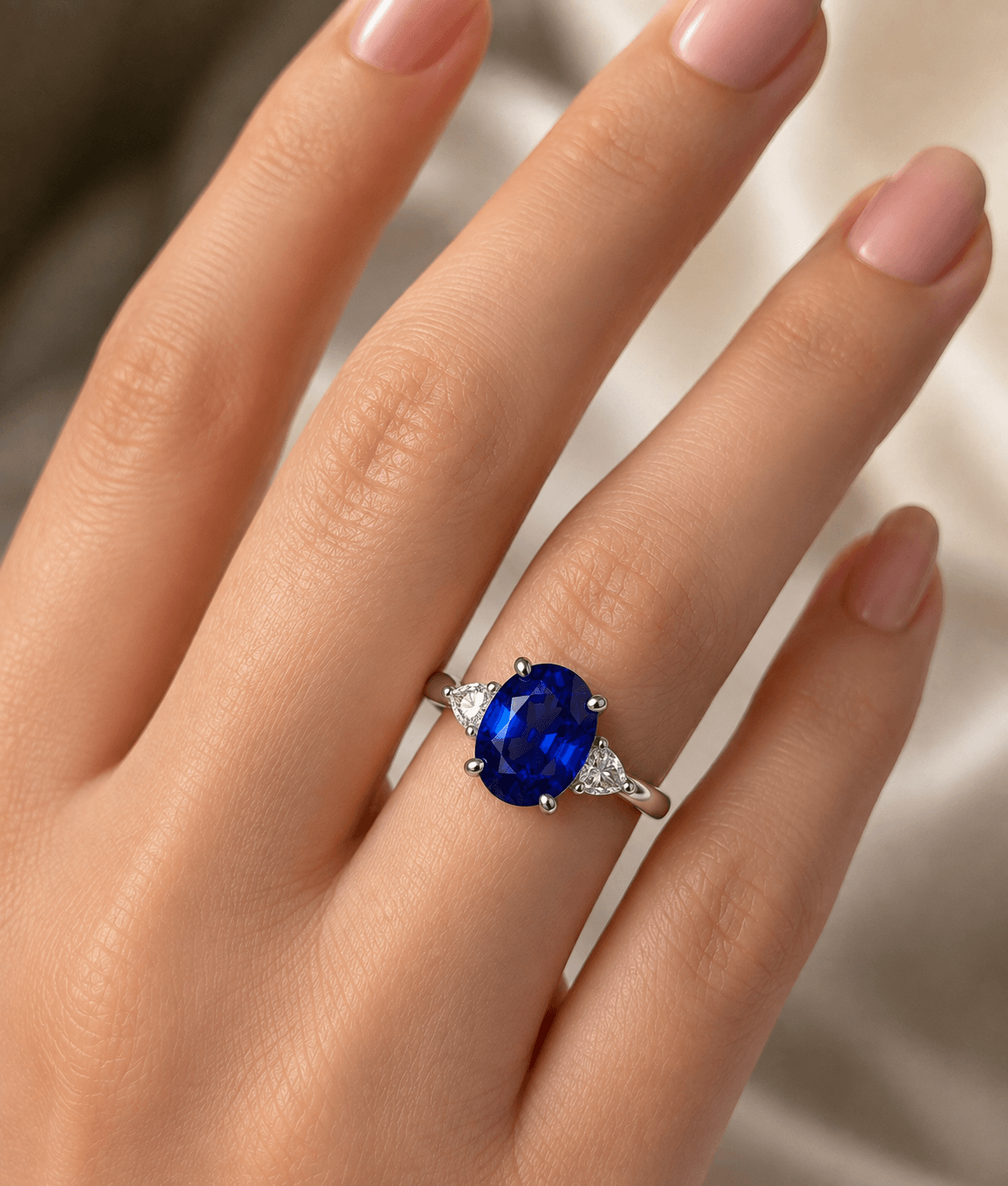
Why Choose a Blue Sapphire Engagement Ring?
Blue sapphire is an excellent choice for engagement rings because of its hardness, toughness, and timeless appearance. It works beautifully in:
- Classic solitaire rings
- Oval gemstone rings
- Cushion-cut designs
- Vintage-inspired settings
- Bezel-set engagement rings
- Contemporary minimalist jewelry
Blue sapphire can be paired with yellow gold, white gold, rose gold, or platinum, and its durability makes it especially attractive for a ring intended to be worn regularly. See is sapphire good for engagement rings? for more.
Can Tanzanite Be Used in Engagement Rings?
Yes, but additional care is necessary. Tanzanite is more vulnerable to damage from impacts than sapphire. If you love tanzanite and want it in an engagement ring, consider a protective bezel or well-designed setting, and remove the ring during sports, heavy work, and other activities that may expose it to hard impacts.
Our Recommendation
For a ring intended for frequent daily wear, choose blue sapphire. For a special-occasion ring or a design where violet-blue color is the main priority, tanzanite can be a beautiful alternative.
Which Blue Gemstone Looks Better in Gold Jewelry?
Both gemstones can look striking in precious metal settings.
- Blue sapphire with yellow gold: a warm contrast against the rich blue, particularly attractive for classic and vintage-inspired jewelry.
- Blue sapphire with white gold or platinum: a cooler, contemporary look that emphasizes the stone's blue tones.
- Tanzanite with white gold: complements tanzanite's blue and violet shades beautifully.
- Tanzanite with rose gold: a softer, warmer contrast with a distinctive, romantic feel.
The best metal depends on personal preference, skin tone, and overall design.
Best Gemstone Shapes for Blue Sapphire and Tanzanite
Gemstone shape can influence brilliance, apparent size, and the finished jewelry design. Our gemstone shape guide compares each cut in detail.
| Shape | Blue sapphire | Tanzanite |
|---|---|---|
| Oval | Excellent for engagement rings | Elegant and popular |
| Cushion | Rich, classic appearance | Highlights blue-violet color |
| Round | Timeless solitaire designs | Attractive brilliance |
| Pear | Distinctive rings and pendants | Graceful pendants and earrings |
| Emerald cut | Structured, sophisticated style | Highlights clarity and color |
| Marquise | Elegant elongated designs | Distinctive statement jewelry |
A well-proportioned cut is more important than choosing a particular shape simply because it is fashionable. For custom jewelry, always check the gemstone's measurements in millimeters before creating the setting.
How to Identify Genuine Blue Sapphire and Tanzanite
Because these gemstones can share similar colors, visual appearance alone is not a reliable way to identify them.
Check the Gemstone's Identity
Blue sapphire is corundum, while tanzanite is zoisite. Professional gemological testing can distinguish them.
Review Treatment Information
Ask whether the gemstone has undergone heating, diffusion, filling, coating, or other relevant treatments.
Examine the Actual Gemstone
Review clear photographs and videos under suitable lighting. Look for attractive color, transparency, and cutting quality.
Request Independent Laboratory Documentation
For significant purchases, a reputable independent gemological report can help establish the gemstone's identity and detectable treatments. Remember that laboratory identification reports are not the same as universal gemstone quality grades. Here's why an IGI certificate matters.
Choose a Transparent Seller
A trustworthy gemstone seller should provide clear information about the stone's weight, dimensions, identity, and disclosed treatments.
Are Blue Sapphire and Tanzanite Good Investments?
Natural gemstones can be valuable possessions, but they should not be treated as guaranteed financial investments. Blue sapphire has a long-established market, and exceptional examples may be highly collectible. Tanzanite's limited source also contributes to collector interest.
However, future prices are uncertain. Resale values depend on quality, market demand, documentation, selling costs, and the availability of buyers. For most customers, the best reason to buy a gemstone is its beauty, suitability for jewelry, and personal significance. We cover this in more depth in are natural gemstones a good investment?
How to Care for Blue Sapphire and Tanzanite
Proper care helps maintain the appearance of fine gemstones.
Blue Sapphire Care
- Clean most untreated or conventionally heated sapphires with warm, mild soapy water.
- Use a soft brush to remove dirt.
- Avoid hard impacts.
- Store separately from other jewelry.
- Follow specialized care guidance for filled or otherwise unusually treated stones.
Tanzanite Care
- Clean with warm, mild soapy water.
- Use a soft cloth or gentle brush.
- Avoid ultrasonic and steam cleaners.
- Protect the gemstone from sudden temperature changes.
- Remove jewelry during physical activities.
- Store separately in a soft pouch or lined jewelry box.
Tanzanite requires more cautious handling because of its lower toughness.
Blue Sapphire vs Tanzanite: Which One Should You Buy?
The right choice depends on your priorities.
Choose blue sapphire if you want
- A durable gemstone for regular wear
- A classic blue engagement ring
- A wide range of blue shades
- A gemstone with an established fine-jewelry heritage
- Options in heated and untreated natural material
Choose tanzanite if you want
- A distinctive violet-blue appearance
- A gemstone from a single, limited source
- A special-occasion jewelry piece
- A December birthstone gift
- A blue-violet stone for earrings or pendants
Neither gemstone is universally better. The ideal choice is the one that matches your lifestyle, budget, and preferred appearance.
Discover Natural Blue Sapphires at JAMSORA
At JAMSORA, we believe that choosing a natural gemstone should begin with understanding its individual qualities. Blue sapphire is a particularly versatile choice for engagement rings, anniversary jewelry, and custom gemstone creations.
When comparing loose gemstones, consider color, cut, dimensions, treatment status, and available documentation. Every stone in our blue sapphire collection is listed individually with its photos, measurements and details, so you can compare them before choosing one for your jewelry project.
Explore natural blue sapphires at JAMSORA
Whether you prefer a delicate light-blue sapphire or a rich royal-blue appearance, choosing the right loose gemstone is an important first step toward creating something personal and lasting.
Frequently Asked Questions About Blue Sapphire vs Tanzanite
Is tanzanite the same as blue sapphire?
No. Blue sapphire is a variety of corundum, while tanzanite is a blue-to-violet variety of zoisite. They have different chemical compositions, physical properties, and geographic occurrences.
Which is more expensive, blue sapphire or tanzanite?
Fine blue sapphire can be considerably more expensive than commercial-quality tanzanite. However, prices depend on individual gemstone quality, size, color, treatments, and market demand.
Is tanzanite rarer than sapphire?
Tanzanite has a more restricted commercial source, occurring in a small area of northern Tanzania. However, exceptional untreated blue sapphires can also be very rare.
Which gemstone is better for an engagement ring?
Blue sapphire is generally the better option for frequent daily wear because of its excellent hardness and toughness.
Can tanzanite be worn every day?
Tanzanite can be worn regularly with careful handling, but it is more vulnerable to impacts and scratching than sapphire. Protective settings and avoiding rough activities are important.
Is blue sapphire more durable than tanzanite?
Yes. Sapphire has a Mohs hardness of 9 and excellent toughness, while tanzanite has a hardness of 6–7 and fair-to-poor toughness.
Does tanzanite change color?
Tanzanite exhibits pleochroism, meaning different colors can be visible from different crystal directions. Its appearance can also vary with lighting.
Are natural blue sapphires always untreated?
No. Many naturally formed blue sapphires undergo heat treatment. The term natural does not automatically mean untreated.
Is heated tanzanite still natural?
Yes, if the original gemstone formed naturally. Heating changes its appearance but does not make it laboratory-grown.
Which gemstone is better for a gift?
Blue sapphire is an excellent option for someone who appreciates classic blue jewelry and durability. Tanzanite is particularly attractive for someone who loves violet-blue colors or celebrates a December birthday.
Final Thoughts: Two Beautiful Blue Gemstones, Two Different Experiences
Blue sapphire and tanzanite are both remarkable gemstones, but they offer different advantages. Blue sapphire combines exceptional durability, classic color, and versatility, making it a particularly strong choice for engagement rings and jewelry intended for regular wear. Tanzanite offers distinctive violet-blue beauty, fascinating optical properties, and a special connection to its Tanzanian source.
If durability and long-term everyday wear are your priorities, blue sapphire is generally the better choice. If you are drawn to violet-blue color and want something distinctive for carefully worn jewelry, tanzanite may be ideal.
Ultimately, the best gemstone is the one whose beauty, quality, and practical characteristics match your needs.
Related Topics
- Blue Sapphire vs Tanzanite
- Natural Blue Sapphire
- Tanzanite Gemstone
- Sapphire vs Tanzanite Price
- Blue Gemstone Comparison
- Natural Loose Gemstones
- Blue Sapphire Engagement Ring
- Tanzanite Engagement Ring
- Sapphire Hardness
- Tanzanite Hardness
- Royal Blue Sapphire
- Gemstone Buying Guide
- Certified Gemstones
- September Birthstone
- December Birthstone
- Gemstone Jewelry
- JAMSORA
Ready to find your own gemstone?
Shop Certified Gemstones